
Strategic Claims Management in the UAE
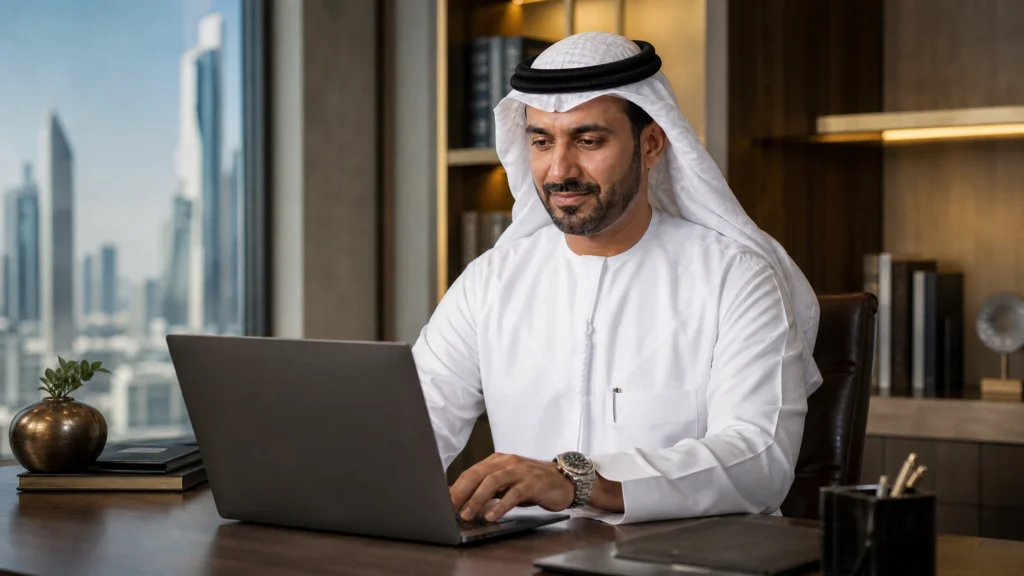
Effective claims management is a cornerstone of corporate stability and legal resilience in the United Arab Emirates. In an environment defined by rapid economic growth and complex multi-party projects—particularly in construction, real estate, and international trade—the ability to identify, quantify, and resolve claims efficiently is paramount.
Under the expert guidance of Adv. Ibrahim Khaleel, DubaiAdvocates.ae provides this authoritative overview of the legal framework governing claim processes in the UAE. Navigating these waters requires not only a deep understanding of the UAE Civil Transactions Law but also the procedural nuances of the various jurisdictions operating within the state, including onshore Dubai Courts and the offshore financial hubs of the DIFC and ADGM.
Understanding the Legal Framework of Claims in the UAE
The management of legal claims in the UAE is primarily grounded in the principle of contractual equity and the statutory obligations defined by federal legislation. Whether a claim arises from a breach of contract, a tortious act, or a statutory right, the process must align with the Federal Decree-Law No. (25) of 2025 (the new Civil Transactions Law) and the Federal Decree-Law No. 42 of 2022 on the Civil Procedure Law.
A successful claim is rarely the result of litigation alone; it is the product of meticulous documentation, timely notices, and a strategic approach to dispute resolution. In the UAE, courts place significant weight on the “Statement of Claim” and the documentary evidence presented at the initial filing stage.
Critical Laws and Regulations Governing UAE Claims
Navigating the UAE legal landscape requires precision in citing the applicable statutes. The following laws form the bedrock of claims administration and litigation:
- Federal Decree-Law No. (25) of 2025 (Civil Transactions Law): This legislation, coming into full effect in June 2026, governs all civil and commercial transactions. It outlines the requirements for contract formation, performance, and the remedies available for breach. Notably, it reduces the age of legal majority to 18, impacting capacity in legal filings.
- Federal Decree-Law No. 42 of 2022 (Civil Procedure Law): This law dictates how claims are filed, served, and adjudicated in the UAE’s “onshore” courts. Recent amendments allow the Court of Appeal to decide certain matters in “deliberation chambers” without public hearings to increase efficiency.
- Federal Decree-Law No. (32) of 2021 (Commercial Companies Law): Essential for claims involving corporate governance, shareholder disputes, and liquidation.
- Dubai Law No. (7) of 2006 (Real Property Registration): The primary authority for real estate-related claims within the Emirate of Dubai.
Jurisdiction and Forum Selection: Dubai Courts vs. DIFC & ADGM
One of the most critical decisions in managing a claim is determining the correct forum. The UAE offers a unique “dual-court” system that provides parties with choices, provided they are structured correctly in their contracts.
1. Dubai Courts (Onshore)
The Dubai Courts operate under a civil law system where proceedings are conducted in Arabic. Claims here rely heavily on written submissions and court-appointed experts.
2. DIFC Courts (Offshore)
The Dubai International Financial Centre (DIFC) Courts operate under an English-language, common law framework. According to the DIFC Court Rules (RDC), the system is designed for “active case management,” where a judge oversees the timetable of the claim from inception to judgment.
3. ADGM Courts (Abu Dhabi Global Market)
Similar to the DIFC, the ADGM Courts provide an English-language platform based on common law principles. They are highly digitized and favored for complex financial and commercial disputes.
Expert Insight: Choosing the wrong jurisdiction can lead to a “Jurisdictional Challenge,” causing significant delays and costs. Adv. Ibrahim Khaleel emphasizes that forum selection should be determined at the contract drafting stage, not when a dispute arises.
The Lifecycle of a Professional Claim Management Process
Managing a claim effectively requires a disciplined approach that begins long before a lawsuit is filed.
Phase 1: Identification and Notification
Most UAE contracts, especially those based on FIDIC standards in construction, require “Notice of Claim” within a specific window (often 28 days). Failure to provide timely notice can result in the claim being barred by “time-bar” provisions.
Phase 2: Evidence Assembly and Quantification
UAE courts and tribunals operate on the principle that “the claimant bears the burden of proof.” This involves gathering:
- Original contracts and stamped amendments.
- Correspondence (emails, letters, meeting minutes).
- Proof of loss (invoices, valuations, expert reports).
Phase 3: Amicable Settlement and Mediation
Before escalating to the Centre for Amicable Settlement of Disputes (a mandatory step for many Dubai Court claims), parties often engage in direct negotiation. The Ministry of Justice and local departments like the Dubai Land Department (DLD) offer mediation services to resolve disputes without the need for a full trial.
Relevant UAE Authorities and Regulatory Bodies
Depending on the nature of the claim, various government entities play a regulatory or supportive role:
- Ministry of Economy: Oversees commercial agencies and consumer protection claims.
- Central Bank of the UAE (CBUAE): Regulates claims involving banking, finance, and insurance through the Sanadak unit.
- Dubai Land Department (DLD): The primary body for real estate disputes and property registration claims.
- Ministry of Human Resources and Emiratisation (MOHRE): Mandatory first stop for all employment-related claims.
Key Scenarios in UAE Claims Management
Real Estate Disputes
Commonly involve delayed handovers or failure to pay service charges. Under Dubai Law No. (13) of 2008, investors must ensure their claims are registered with the Rental Dispute Center (RDC) or the DLD, depending on the contract terms.
Construction and Engineering Claims
These often revolve around “Extension of Time” (EOT) and “Variation Orders.” Accurate daily logs and site reports are essential evidence under the Civil Transactions Law.
Insurance Recovery
Since the enactment of Federal Decree-Law No. (6) of 2025 regarding the Central Bank and Insurance Business, claims against insurers must follow specific timelines and may be escalated to the CBUAE if settlement is not reached.
The Role of DubaiAdvocates.ae Lawyers and Legal Consultants
Managing a claim in the UAE is a high-stakes endeavor that requires a combination of local procedural knowledge and international best practices. Adv. Ibrahim Khaleel and the team at DubaiAdvocates.ae provide end-to-end support, including:
- Claim Audits: Reviewing existing contracts and project documentation to identify potential claims.
- Strategic Drafting: Preparing “Statements of Claim” that are legally robust and optimized for the specific requirements of the Dubai or DIFC/ADGM Courts.
- Expert Liaison: Working with technical and financial experts to quantify losses accurately.
- Representation: Providing authoritative advocacy in all UAE court levels and arbitration forums like DIAC.
Overview
English:
Effective claims management in the UAE requires strict adherence to the Civil Transactions and Procedure Laws. Whether in Dubai Courts or the DIFC, success depends on timely notification and meticulous documentation.
Arabic:
تتطلب الإدارة الفعالة للمطالبات في دولة الإمارات التزاماً صارماً بقوانين المعاملات المدنية والإجراءات. وسواء كان ذلك أمام محاكم دبي أو محاكم مركز دبي المالي العالمي، فإن النجاح يعتمد على الإخطار في الوقت المناسب والتوثيق الدقيق.
French:
La gestion efficace des réclamations aux Émirats Arabes Unis exige le respect strict des lois sur les transactions civiles. Le succès dépend d’une notification rapide et d’une documentation méticuleuse.
Russian:
Эффективное управление претензиями в ОАЭ требует строгого соблюдения законов о гражданских сделках и процедурах. Успех зависит от своевременного уведомления и тщательного документирования.
Chinese:
在阿联酋,有效的索赔管理需要严格遵守《民事交易法》和《程序法》。无论是在迪拜法院还是 DIFC,成功都取决于及时的通知和详尽的文件记录。
Italian:
La gestione efficace dei reclami negli Emirati Arabi Uniti richiede il rigoroso rispetto delle leggi sulle transazioni civili e sulle procedure. Il successo dipende dalla tempestiva notifica e dalla documentazione meticolosa.
Spanish:
La gestión eficaz de reclamaciones en los EAU requiere el cumplimiento estricto de las leyes de transacciones y procedimientos civiles. El éxito depende de la notificación oportuna y la documentación meticulosa.
German:
Ein effektives Forderungsmanagement in den VAE erfordert die strikte Einhaltung der Ziviltransaktions- und Verfahrensgesetze. Der Erfolg hängt von der rechtzeitigen Benachrichtigung und einer sorgfältigen Dokumentation ab.
Hebrew:
ניהול תביעות יעיל באיחוד האמירויות מחייב עמידה קפדנית בחוקי העסקאות והפרוצדורה האזרחית. ההצלחה תלויה בהודעה בזמן ותיעוד מדוקדק.
Turkish:
BAE’de etkili hak talebi yönetimi, Medeni İşlemler ve Usul Kanunlarına sıkı sıkıya bağlı kalmayı gerektirir. Başarı, zamanında bildirime ve titiz belgelendirmeye bağlıdır.
Afrikaans:
Effektiewe eisebestuur in die VAE vereis streng nakoming van die Siviele Transaksies- en Prosedurewette. Sukses hang af van tydige kennisgewing en noukeurige dokumentasie.
Filipino:
Ang epektibong pamamahala ng mga claim sa UAE ay nangangailangan ng mahigpit na pagsunod sa Civil Transactions at Procedure Laws. Ang tagumpay ay nakasalalay sa napapanahong abiso at masusing dokumentasyon.
Frequently Asked Questions
- What is the statute of limitations for civil claims in the UAE? Generally, it is 15 years, but specific commercial and insurance claims often have much shorter periods (e.g., 2-3 years).
- Can I file a claim in English in Dubai? Only in the DIFC or ADGM Courts. Onshore Dubai Courts require all documents in Arabic.
- Is mediation mandatory in Dubai? Yes, for many civil and commercial cases, you must first go through the Centre for Amicable Settlement of Disputes.
- What is a “Statement of Claim”? It is the foundational document that outlines the facts, legal grounds, and specific remedies sought.
- How long does a typical court case take in Dubai? A First Instance judgment usually takes 6 to 12 months.
- Are legal fees recoverable? Yes, UAE courts typically award a portion of legal fees to the prevailing party.
- Can I claim for “Loss of Profit” in the UAE? Yes, provided the loss is direct, certain, and evidenced.
- What is the role of a court-appointed expert? They provide technical assessments (accounting, engineering) that judges rely on for their final verdict.
- How do I enforce a DIFC Court judgment onshore? Through a streamlined reciprocal enforcement mechanism between the DIFC and Dubai Courts.
- What is an “Interim Attachment”? A court order to freeze the defendant’s assets to ensure funds are available if the claim is successful.
- Do I need a Power of Attorney (POA)? Yes, a notarized and often legalized POA is required for a lawyer to represent you.
- Can electronic evidence (WhatsApp/Email) be used? Yes, under Federal Decree-Law No. (46) of 2021 on Electronic Transactions.
- What is the Small Claims Tribunal (SCT)? A DIFC forum for claims under AED 500,000 where parties usually represent themselves.
- How are court fees calculated? In Dubai, they are usually a percentage of the claim value, capped at specific amounts.
- Can I appeal a judgment? Yes, judgments can typically be appealed to the Court of Appeal and eventually the Court of Cassation.
Sum-up
Successful claims management in the UAE is a proactive discipline. By understanding the interplay between the Civil Transactions Law, the specific jurisdictional requirements of the DIFC or Dubai Courts, and the necessity of robust documentation, businesses and individuals can significantly mitigate risk. Consulting with experienced legal professionals like Adv. Ibrahim Khaleel ensures that your rights are preserved and your claims are positioned for maximum success.
Call to Action (CTA):
Email: file@dubaiadvocates.ae
Phone/WhatsApp: +971561663345
Website: https://dubaiadvocates.ae/
Disclaimer:
“This content is for general informational purposes only and does not constitute legal advice. For advice specific to your situation, consult a qualified legal professional in the UAE.”
Category
Get in touch
contact us
+971561663345
Send us a email
file@dubaiadvocates.ae
Contact with us
+971561663345
Our office location
Le Solarium Tower, Level 13, Office 13, Dubai Silicon Oasis, Dubai.
A licensed UAE law firm advising individuals and businesses across corporate law, criminal defence, real estate, employment, family law, and commercial disputes — throughout UAE onshore courts, DIFC, and ADGM.
pages
Working hour
- Monday - Friday
- 09:00 am - 07:00 pm