
Navigating Delay & Variation Claims in UAE Construction
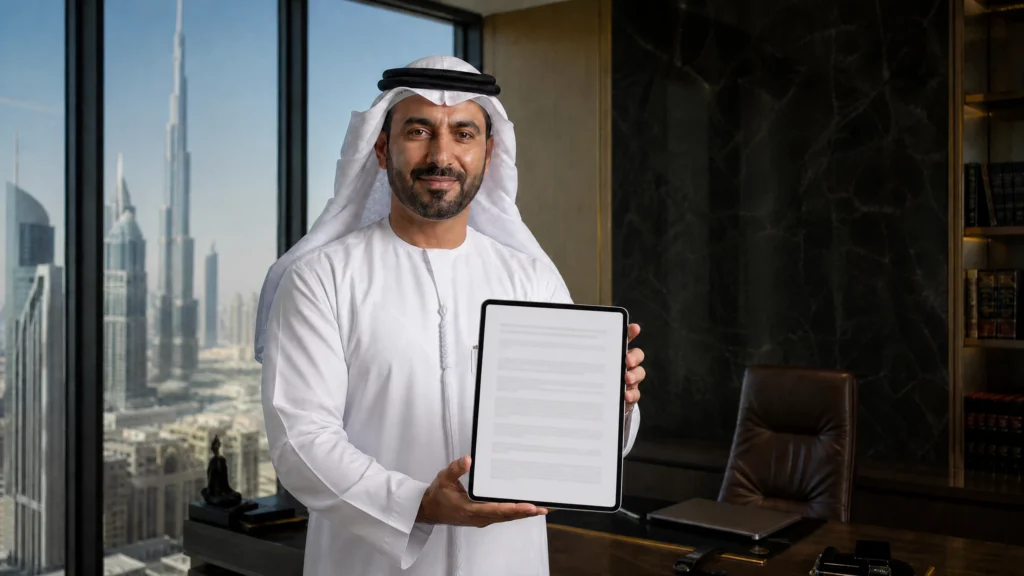
In the dynamic landscape of the United Arab Emirates construction sector, where skyline-defining projects are the norm, the complexity of execution often leads to two primary friction points: Delay Claims and Variation Claims. For developers, contractors, and subcontractors, understanding the legal framework governing these claims is not merely a matter of contract management—it is a matter of financial survival. Under the strategic guidance of Adv. Ibrahim Khaleel, our firm, DubaiAdvocates.ae, has spent decades navigating the intricate intersections of UAE Civil Law and international contracting standards like FIDIC.
The UAE legal system, primarily rooted in civil law principles, provides a robust framework to address these issues. Whether you are dealing with a “Lump Sum” contract or a “Remeasured” agreement, the rights to an Extension of Time (EOT) or additional costs for changes in scope are governed by specific provisions of the UAE Civil Transactions Law and established judicial precedents from the Dubai Court of Cassation.
1. Understanding Delay Claims under UAE Law
A delay claim arises when the progress of construction is hindered, preventing the contractor from achieving the completion date specified in the contract. In the UAE, these claims are categorized based on liability: excusable delays (which may grant an extension of time), compensable delays (which grant both time and money), and non-excusable delays (which trigger liquidated damages).
The Legal Basis for Extensions of Time (EOT)
The core of any delay dispute lies in Federal Law No. (5) of 1985 (UAE Civil Code), specifically within the section on Muqawala (Construction) contracts. Article 872 and subsequent provisions emphasize that the contractor must perform the work according to the contract’s terms and within the agreed period.
However, UAE law recognizes the “Prevention Principle.” If an employer’s actions—such as late site access or delayed approvals—prevent the contractor from finishing on time, the employer cannot strictly enforce the original completion date.
2. Variation Claims: Managing Changes in Scope
Variations, or “Change Orders,” involve any modification to the original scope of work, including additions, omissions, or substitutions. In the ambitious projects of Dubai and Abu Dhabi, variations are nearly inevitable.
Lump Sum vs. Remeasured Contracts
The legal treatment of variations depends heavily on the contract type:
- Lump Sum (Article 887): Under a fixed-price contract, the contractor generally cannot demand a price increase due to rising material costs or labor wages. However, if the variation stems from a fundamental change in design or additional requirements by the employer, the contractor is entitled to compensation.
- Remeasured Contracts: These are governed by the actual quantities of work performed. Variations are typically valued based on the Bill of Quantities (BOQ) rates already agreed upon.
3. Key Applicable Laws and Regulations
Navigating disputes in the UAE requires a precise understanding of the legislative hierarchy. Our practice focuses on the following primary sources:
- Federal Law No. (5) of 1985 (UAE Civil Code): The foundational law for all Muqawala contracts. Notable articles include Article 246 (Good Faith), Article 390 (Liquidated Damages adjustment), and Article 887 (Lump Sum variations).
- Federal Decree-Law No. (25) of 2025 (The “2026 CTL”): This new law, effective from June 1, 2026, introduces critical updates to limitation periods and hardship provisions (Article 829), replacing parts of the 1985 law for new contracts.
- Federal Law No. (32) of 2021 (Commercial Companies Law): Relevant for corporate entities engaged in joint ventures for major infrastructure projects.
- Administrative Circulars: In Dubai, circulars from the Dubai Land Department (DLD) and the Dubai Municipality often dictate technical standards that can trigger variation claims if updated during a project.
4. The Role of Good Faith in Claims
One of the most powerful tools in UAE litigation is the Principle of Good Faith (Article 246 of the Civil Code). It mandates that a contract must be performed in a manner consistent with the requirements of good faith.
In the context of delay and variation:
- Notice Requirements: While international contracts often have strict “time-bars” for notices, UAE courts may sometimes look past a missed deadline if the employer was already aware of the delay and insisting on the time-bar would violate the principle of good faith.
- Unjust Enrichment: Article 318 of the Civil Code prevents a party from benefiting at the expense of another without legal cause. This is frequently cited when an employer has accepted varied work but refuses to pay for it due to a technical lack of a written “Variation Order.”
5. Liquidated Damages and Judicial Discretion
Most UAE construction contracts include a clause for Liquidated Damages (LDs) to compensate the employer for delays. However, Article 390(2) of the UAE Civil Code provides a unique safeguard. It allows a judge or arbitrator to increase or decrease the agreed damages to match the actual loss suffered.
“The judge may, on the application of either of the parties, vary such agreement so as to make the compensation equal to the loss, and any agreement to the contrary shall be void.”
This means that even if a contract stipulates a high daily penalty for delay, a contractor can petition the court to reduce it if they can prove the employer suffered no real financial harm.
6. Jurisdiction: Where are Claims Resolved?
The forum for your dispute significantly impacts the outcome.
Dubai Courts vs. DIFC Courts
- Dubai Courts: Conducted in Arabic, these courts rely heavily on court-appointed experts. The Dubai Court of Cassation has established that technical findings by an expert are usually adopted unless they are legally flawed.
- DIFC Courts (Dubai International Financial Centre): An English-language, common-law jurisdiction. The DIFC Court’s Technology and Construction Division (TCD) is highly specialized. A landmark 2022 case (Panther Real Estate Development v Modern Executive Systems) clarified that failing to meet notice conditions-precedent in FIDIC contracts can be fatal to an EOT claim in the DIFC.
ADGM and Arbitration
In Abu Dhabi, the ADGM (Abu Dhabi Global Market) offers a similar common-law environment. Furthermore, many contracts opt for DIAC (Dubai International Arbitration Centre) to ensure a private and expert-led resolution process.
7. Relevant UAE Departments & Authorities
Successful claim management often involves interaction with specific government bodies:
- Ministry of Energy & Infrastructure: For federal-level infrastructure projects.
- Dubai Land Department (DLD): Crucial for real estate development disputes.
- Ministry of Justice: The primary portal for accessing the UAE Legislation Portal and federal court rulings.
8. Common Scenarios in Delay and Variation Disputes
Scenario A: Concurrent Delay
What happens if both the employer and the contractor are responsible for the delay? UAE law generally leans toward an apportionment of liability. Under Article 290, the court may reduce the damages if the “victim” (employer) contributed to the harm.
Scenario B: Verbal Instructions for Variations
A contractor performs extra work based on a verbal “site instruction” but the employer refuses to pay, citing a “written variations only” clause. Adv. Ibrahim Khaleel and our team often utilize the principles of Muqawala and “Unjust Enrichment” to argue that since the employer accepted the benefit of the work, the contractor is entitled to the value of that work.
9. The Role of DubaiAdvocates.ae Lawyers
Navigating construction disputes in Dubai requires more than just legal knowledge; it requires a strategic understanding of how technical evidence is presented to UAE courts and experts.
Adv. Ibrahim Khaleel brings over 15 years of boots-on-the-ground experience in:
- Drafting and Negotiating: Robust Muqawala contracts that clearly define variation procedures.
- Claim Prosecution: Preparing comprehensive EOT and prolongation cost claims.
- Litigation & Arbitration: Representing clients in Dubai Courts, DIFC, and DIAC to challenge or defend liquidated damages and variation valuations.
- Expert Management: Working closely with quantity surveyors and delay analysts to ensure their findings are admissible and persuasive under UAE law.
Overview
English
Delay and variation claims are the most common disputes in UAE construction. Governed primarily by the UAE Civil Code (Federal Law No. 5 of 1985), these claims require strict adherence to notice requirements and the principle of good faith. Contractors may seek an Extension of Time (EOT) and additional costs for changes in scope, while employers may levy liquidated damages for unexcused delays. UAE courts have the unique power under Article 390 to adjust agreed damages to reflect actual losses.
Arabic (العربية)
تعتبر مطالبات التأخير والأوامر التغييرية من أكثر النزاعات شيوعاً في قطاع الإنشاءات في دولة الإمارات. تخضع هذه المطالبات بشكل أساسي لقانون المعاملات المدنية الإماراتي (القانون الاتحادي رقم 5 لسنة 1985). تتطلب هذه المطالبات التزاماً صارماً بمتطلبات الإخطار ومبدأ حسن النية. يمكن للمقاولين طلب تمديد الوقت (EOT) وتكاليف إضافية للتغييرات في نطاق العمل، بينما يمكن لأصحاب العمل فرض غرامات تأخير عن التأخيرات غير المبررة. وتتمتع المحاكم الإماراتية بسلطة فريدة بموجب المادة 390 لتعديل التعويض المتفق عليه ليعكس الخسائر الفعلية.
French (Français)
Les réclamations pour retard et modifications sont les litiges les plus fréquents dans la construction aux EAU. Régies par le Code civil des EAU, ces réclamations exigent le respect des délais de notification et du principe de bonne foi. Les entrepreneurs peuvent demander une extension de délai (EOT) et des coûts supplémentaires, tandis que les maîtres d’ouvrage peuvent appliquer des pénalités de retard.
Russian (Русский)
Претензии по задержкам и изменениям объемов работ являются наиболее частыми спорами в строительном секторе ОАЭ. Регулируемые Гражданским кодексом ОАЭ, эти требования требуют строгого соблюдения уведомлений и принципа добросовестности. Подрядчики могут требовать продления сроков (EOT) и оплаты дополнительных расходов.
Chinese (中文)
工期延误和变更索赔是阿联酋建筑业最常见的争议。这些索赔主要受阿联酋民法典管辖,要求严格遵守通知程序和诚实信用原则。承包商可以寻求延长工期(EOT)和额外费用,而业主则可以针对无故延误征收违约金。阿联酋法院有权根据第390条调整商定的赔偿金。
Italian (Italiano)
Le richieste di risarcimento per ritardi e varianti sono le controversie più comuni nell’edilizia negli Emirati Arabi Uniti. Disciplinate dal Codice Civile degli Emirati Arabi Uniti, queste richieste richiedono il rispetto dei requisiti di notifica e del principio di buona fede.
Spanish (Español)
Las reclamaciones por retrasos y variaciones son las disputas más comunes en la construcción en los EAU. Reguladas por el Código Civil de los EAU, estas reclamaciones exigen el cumplimiento estricto de las notificaciones y del principio de buena fe. Los contratistas pueden solicitar prórrogas de tiempo (EOT).
German (Deutsch)
Verzögerungs- und Nachtragsforderungen sind die häufigsten Streitigkeiten im Bauwesen der VAE. Diese Ansprüche unterliegen dem Zivilgesetzbuch der VAE und erfordern die strikte Einhaltung von Anzeigefristen und den Grundsatz von Treu und Glauben.
Hebrew (עברית)
תביעות בגין עיכובים ושינויים הן הסכסוכים הנפוצים ביותר בענף הבנייה באיחוד האמירויות. תביעות אלו, הכפופות לקוד האזרחי של איחוד האמירויות, דורשות עמידה קפדנית בדרישות ההודעה ובעיקרון תום הלב.
Turkish (Türkçe)
Gecikme ve değişiklik talepleri, BAE inşaat sektöründeki en yaygın anlaşmazlıklardır. BAE Medeni Kanunu’na tabi olan bu talepler, bildirim şartlarına ve dürüstlük kuralına sıkı sıkıya bağlı kalmayı gerektirir.
Afrikaans
Vertragings- en variasie-eise is die algemeenste dispute in die konstruksiebedryf van die VAE. Hierdie eise word hoofsaaklik deur die Burgerlike Wetboek van die VAE beheer en vereis streng nakoming van kennisgewingvereistes.
Filipino
Ang mga claim sa pagkaantala (delay) at pagbabago (variation) ang pinakakaraniwang hindi pagkakaunawaan sa konstruksyon sa UAE. Pinamamahalaan ng UAE Civil Code, ang mga ito ay nangangailangan ng mahigpit na pagsunod sa mga abiso at prinsipyo ng “good faith.”
Frequently Asked Question
Can I claim an extension of time if the delay was caused by weather?
Yes, under UAE law, “force majeure” or exceptional weather conditions can be grounds for an EOT, provided they were unforeseeable.
Is a verbal instruction for a variation legally binding?
It can be, under the principle of “unjust enrichment,” though written proof is always preferred in Dubai Courts.
Can the employer increase liquidated damages if my delay caused high losses?
Yes, Article 390(2) allows the court to increase damages to match the actual loss, even if the contract specifies a lower amount.
What is a “Time-Bar” clause?
It is a clause stating that a claim is waived if not submitted within a specific period (e.g., 28 days).
Does UAE law recognize the “Prevention Principle”?
Yes, an employer cannot profit from a delay they caused.
What role does a court-appointed expert play?
In UAE litigation, the judge appoints an engineering expert to review the technical merits of the delay and variation claims.
What is “Prolongation Cost”?
These are the additional overhead costs a contractor incurs because the project lasted longer than planned due to the employer’s fault.
Can I stop work if I am not paid for variations?
Be cautious; unauthorized suspension of work can be a breach of contract unless specific legal conditions are met.
Are FIDIC contracts fully enforceable in the UAE?
Generally yes, but they are subject to mandatory UAE laws, such as Article 390 regarding damages.
How long do I have to file a construction claim?
The standard limitation period is 10 years for decennial liability, but contractual claims usually have shorter statutory limits (often 15 years under the 1985 code, but changing under the 2026 update).
What is a “Lump Sum” contract variation?
A change to a fixed-price contract that entitles the contractor to extra payment if the employer changes the design.
Can an arbitrator override the contract terms?
An arbitrator can apply mandatory UAE laws (like the good faith principle) which may override certain harsh contractual clauses.
Do I need to prove the employer’s bad faith to get a variation paid?
No, proving the work was performed and the employer benefited is usually sufficient.
What is the DIFC TCD?
The Technology and Construction Division of the DIFC Courts, specializing in complex engineering disputes.
How does the 2026 Civil Transactions Law affect my current contract?
Generally, it applies to contracts signed after June 1, 2026, though some limitation periods may apply retroactively.
Sum-up
Managing delay and variation claims in the UAE requires a proactive legal strategy. From ensuring that notice provisions are met to understanding the discretionary powers of the Dubai Courts to adjust liquidated damages, every step must be aligned with the UAE Civil Transactions Law. Under the leadership of Adv. Ibrahim Khaleel, DubaiAdvocates.ae ensures that your construction projects are protected by rigorous legal oversight and a deep understanding of local judicial trends.
Call to Action (CTA):
Email: file@dubaiadvocates.ae | Phone/WhatsApp: +971561663345 | Website: https://dubaiadvocates.ae/
Disclaimer:
“This content is for general informational purposes only and does not constitute legal advice. For advice specific to your situation, consult a qualified legal professional in the UAE.”
Category
Get in touch
contact us
+971561663345
Send us a email
file@dubaiadvocates.ae
Contact with us
+971561663345
Our office location
Le Solarium Tower, Level 13, Office 13, Dubai Silicon Oasis, Dubai.
A licensed UAE law firm advising individuals and businesses across corporate law, criminal defence, real estate, employment, family law, and commercial disputes — throughout UAE onshore courts, DIFC, and ADGM.
pages
Working hour
- Monday - Friday
- 09:00 am - 07:00 pm