- +971561663345
- file@dubaiadvocates.ae
- Mon-Fri 9:00 am - 7:00 pm

Comprehensive Guide to Real Estate and Construction Law in the UAE
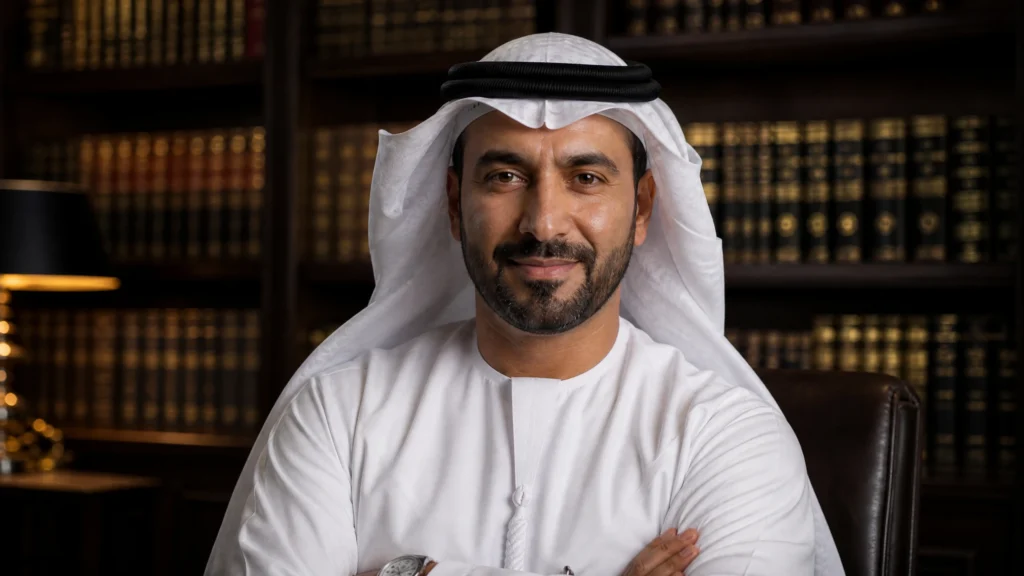
The landscape of real estate and construction in the United Arab Emirates is a cornerstone of the nation’s economic vision. As Dubai and the wider UAE continue to attract global investment, the legal framework governing property acquisition, development, and building projects has become increasingly sophisticated. Under the leadership of Adv. Ibrahim Khaleel, our firm provides authoritative guidance through the intricate maze of federal and emirate-level regulations that define this sector.
Whether you are an institutional investor, a developer embarking on a large-scale project, or an individual purchaser, understanding the nuances of UAE property legislation is paramount to securing your assets and ensuring project viability.
The Foundation of Real Estate Governance in Dubai and the UAE
The legal architecture for real estate in the UAE is built upon a dual system: Federal Laws that apply across all seven emirates and Emirate-specific Laws that address local market dynamics. In Dubai, the regulatory environment is notably advanced, designed to foster transparency and protect all stakeholders.
Key Legislative Pillars
- UAE Federal Civil Transactions Law (Federal Decree-Law No. 5 of 1985): This acts as the “mother law” for all civil contracts, including property sales and construction agreements. It outlines the fundamental principles of contract formation, performance, and liability.
- Dubai Law No. 7 of 2006 Concerning Real Property Registration: This landmark legislation established the right for non-GCC nationals to own freehold property in designated areas (often called “Investment Areas”) and mandated that all property rights be registered with the Dubai Land Department (DLD).
- Federal Law No. 6 of 2018 on Arbitration: Essential for the construction sector, this law modernized how disputes are settled outside of traditional courts, aligning UAE practice with international UNCITRAL standards.
Navigating Construction Contracts and Muqawala
In UAE law, construction contracts are categorized under “Muqawala,” a term derived from Islamic Sharia and formalized in the Civil Transactions Law. A Muqawala contract is one where one party undertakes to make something or perform work in return for compensation.
Decennial Liability: A 10-Year Guarantee
One of the most critical aspects of UAE construction law is Decennial Liability. Under Articles 880 to 883 of the Civil Code, contractors and architects are jointly liable for a period of 10 years for the total or partial collapse of a building they constructed, or for any defects that threaten the stability and safety of the structure. This liability is strict; it cannot be limited or waived by contract, providing a high level of protection for property owners.
Recent Regulatory Shifts in 2025 and 2026
Recent updates in Dubai have introduced a more centralized digital registry for contractors. New administrative orders now require contractors to be classified based on verified financial and technical capabilities via the “Invest in Dubai” platform. This ensures that only qualified entities handle complex infrastructure projects, further mitigating risks for developers.
Caption: The UAE construction sector is governed by strict technical standards and the principle of Muqawala.
Off-Plan Property Protections and the Interim Register
Investing in properties that are yet to be built—commonly known as off-plan—is a major segment of the Dubai market. To prevent historical issues like project delays or cancellations, the government enacted Dubai Law No. 13 of 2008 (as amended by Law No. 19 of 2020).
- The Interim Property Register (Oqood): All off-plan sales must be registered in the Oqood system maintained by the Dubai Land Department. Failure to register these transactions renders them legally void.
- Escrow Accounts: Developers are strictly prohibited from collecting payments directly for off-plan units. All funds must be deposited into a project-specific Escrow Account, which is only released based on certified construction milestones. This ensures that buyer capital is used solely for the development of the project.
Jurisdiction and Dispute Resolution Forums
When disputes arise, the choice of forum is a strategic decision. The UAE offers several world-class judicial and arbitral pathways:
1. Dubai Courts (Civil/Real Estate Circuit)
The local courts are the primary forum for property disputes. Proceedings are conducted in Arabic, and the court relies heavily on court-appointed experts to evaluate technical construction delays or valuation issues.
2. DIFC Courts (Dubai International Financial Centre)
As an independent English-language common law jurisdiction, the DIFC Courts are often chosen for high-value commercial real estate disputes or international construction contracts. They offer a transparent, predictable legal environment that is highly regarded by global investors.
3. ADGM Courts (Abu Dhabi Global Market)
Similar to the DIFC, the ADGM Courts operate under English Common Law in Abu Dhabi. They provide a sophisticated platform for resolving disputes involving real estate funds or large-scale infrastructure projects seated in or opting into ADGM jurisdiction.
4. Arbitration (DIAC)
The Dubai International Arbitration Centre (DIAC) is the leading regional body for settling construction disputes. Arbitration is favored for its confidentiality and the ability to appoint arbitrators with specific engineering or technical expertise.
The Role of Regulatory Authorities
The stability of the UAE real estate market is maintained by robust government oversight:
- Real Estate Regulatory Agency (RERA): The regulatory arm of the DLD that licenses brokers, manages the Rent Index, and oversees the performance of developers.
- Dubai Municipality: Responsible for building codes, safety inspections, and issuing completion certificates.
- Ministry of Energy and Infrastructure: Manages federal-level infrastructure and sets the standards for sustainable construction practices across the emirates.
Common Scenarios in Real Estate Litigation
Adv. Ibrahim Khaleel and our legal team frequently encounter several recurring themes in real estate and construction law:
- Delayed Project Handover: We assist buyers in seeking compensation or contract termination when developers fail to deliver properties within the grace periods stipulated in the Sale and Purchase Agreement (SPA).
- Rental Disputes: Utilizing the Rental Dispute Settlement Centre (RDSC), we represent both landlords and tenants in matters concerning illegal evictions or rent hikes that exceed the RERA Rent Index limits defined by Decree No. 43 of 2013.
- Subcontractor Non-Payment: We provide strategic advice to subcontractors facing payment delays from main contractors, often utilizing the “Pay-When-Paid” clause analysis under UAE law.
The Role of DubaiAdvocates.ae Lawyers and Legal Consultants
Navigating the complexities of property and construction law requires a partner who understands both the “letter of the law” and the practical realities of the UAE market. Adv. Ibrahim Khaleel brings over 15 years of on-the-ground experience to every case.
Our firm provides:
- Due Diligence: Comprehensive vetting of developers, title deeds, and project status before investment.
- Contractual Drafting: Tailoring FIDIC-based construction contracts to comply with UAE mandatory provisions.
- Representation: Fierce advocacy in the Dubai Courts, DIFC, and arbitration proceedings.
- Regulatory Compliance: Ensuring all corporate real estate holdings are registered and compliant with the latest Beneficial Ownership and AML regulations.
Overview
English:
The UAE’s real estate and construction sectors are governed by a blend of Federal and Emirate-level laws, such as Dubai Law No. 7 of 2006. Key protections include mandatory registration of all transactions with the DLD and the use of Escrow accounts for off-plan projects. Construction contracts (Muqawala) carry a 10-year decennial liability for structural defects.
Arabic (العربية):
تخضع قطاعات العقارات والإنشاءات في دولة الإمارات العربية المتحدة لمزيج من القوانين الاتحادية والمحلية، مثل قانون دبي رقم 7 لسنة 2006. وتشمل الحمايات الرئيسية التسجيل الإلزامي لجميع التصرفات العقارية لدى دائرة الأراضي والأملاك واستخدام حسابات الضمان للمشاريع على الخارطة. تحمل عقود المقاولة مسؤولية عشرية لمدة 10 سنوات عن العيوب الهيكلية.
French (Français):
Le secteur immobilier et de la construction aux EAU est régi par des lois fédérales et locales. Les protections incluent l’enregistrement obligatoire des transactions auprès du DLD et la responsabilité décennale de 10 ans pour les défauts de construction.
Russian (Русский):
Сектор недвижимости и строительства в ОАЭ регулируется федеральными и местными законами. Основные меры защиты включают обязательную регистрацию сделок в DLD и 10-летнюю децинарную ответственность за структурные дефекты.
Chinese (中文):
阿联酋的房地产和建筑业受联邦和酋长国法律管辖。关键保护措施包括在DLD强制登记所有交易,以及对结构缺陷承担为期10年的十年责任制。
Italian (Italiano):
Il settore immobiliare e delle costruzioni negli Emirati Arabi Uniti è regolato da leggi federali ed emiratine. Le tutele includono la registrazione obbligatoria presso il DLD e la responsabilità decennale per difetti strutturali.
Spanish (Español):
El sector inmobiliario y de la construcción en los EAU se rige por leyes federales y locales. Las protecciones incluyen el registro obligatorio ante el DLD y la responsabilidad decenal por defectos estructurales.
German (Deutsch):
Der Immobilien- und Bausektor in den VAE wird durch Bundes- und Emiratsgesetze geregelt. Zu den Schutzmaßnahmen gehören die obligatorische Registrierung beim DLD und eine 10-jährige verschuldensunabhängige Haftung für Baumängel.
Hebrew (עברית):
מגזר המקרקעין והבנייה באיחוד האמירויות מוסדר על ידי חוקים פדרליים ומקומיים. ההגנות כוללות רישום חובה ב-DLD ואחריות לעשר שנים על פגמים מבניים.
Turkish (Türkçe):
BAE’deki gayrimenkul ve inşaat sektörü federal ve yerel yasalarla yönetilmektedir. Temel korumalar arasında DLD’ye zorunlu kayıt ve yapısal kusurlar için 10 yıllık sorumluluk yer almaktadır.
Afrikaans:
Die eiendoms- en konstruksiesektor in die VAE word deur federale en emiraat-vlak wette gereguleer. Sleutelbeskermings sluit verpligte registrasie by die DLD en 10-jaar aanspreeklikheid vir strukturele gebreke in.
Filipino:
Ang sektor ng real estate at konstruksyon sa UAE ay pinamamahalaan ng mga batas pederal at lokal. Kasama sa mga proteksyon ang mandatoryong pagpaparehistro sa DLD at ang 10-taong decennial liability para sa mga depekto sa istruktura.
Frequently Asked Questions
Can foreigners own property in Dubai?
Yes, non-GCC nationals can own freehold property in designated “Investment Areas” as per Law No. 7 of 2006.
What is an Escrow Account in Dubai real estate?
It is a bank account where developer funds for off-plan projects are kept, managed by the DLD to ensure money is spent only on construction.
How long is a contractor liable for structural defects?
Under Articles 880-883 of the Civil Code, contractors have a 10-year decennial liability.
What is the “Oqood” system?
Oqood is the interim register for off-plan property units in Dubai.
Can I cancel an off-plan contract if the project is delayed?
Yes, depending on the length of delay and the terms of the SPA, often governed by DLD guidelines.
Does the DIFC have its own real estate laws?
Yes, the DIFC operates under its own Real Property Law (DIFC Law No. 10 of 2018).
What is the RERA Rent Index?
A government tool used to determine the legal limit for rent increases in Dubai.
How much notice must a landlord give for a rent increase?
A 90-day notice prior to the expiry of the lease agreement is mandatory.
What happens if a developer goes bankrupt?
The DLD and RERA have procedures to appoint new developers or liquidate assets to protect investors via the Escrow law.
Is arbitration better than court for construction disputes?
Arbitration offers technical expertise and confidentiality, while courts are generally faster for straightforward claims.
Are “Pay-When-Paid” clauses legal in the UAE?
They are common but their enforcement depends on specific interpretations by the UAE Courts regarding “conditional obligations.”
Can I buy property in Abu Dhabi?
Yes, Abu Dhabi allows foreign ownership in designated zones like Al Reem Island and Yas Island.
What is a Musataha right?
It is a right that allows a person to build on land owned by another for a period up to 50 years.
How do I verify a broker’s license?
You can check the broker’s credentials on the “Dubai Rest” app provided by the DLD.
What is the Rental Dispute Settlement Centre (RDSC)?
The specialized judicial arm of the DLD that handles all landlord-tenant disputes in Dubai.
Sum-up
The UAE’s real estate and construction legal framework is designed to provide a secure and transparent environment for growth. From the mandatory registration of property rights at the Dubai Land Department to the rigorous 10-year liability imposed on contractors, the law prioritizes stability and investor confidence. As the market evolves into 2026 and beyond, staying informed of these regulations—and seeking the counsel of experienced professionals like Adv. Ibrahim Khaleel—is the most effective way to protect your interests.
Call to Action (CTA):
Email: file@dubaiadvocates.ae Phone/WhatsApp: +971561663345 Website: https://dubaiadvocates.ae/
Disclaimer:
“This content is for general informational purposes only and does not constitute legal advice. For advice specific to your situation, consult a qualified legal professional in the UAE.”
Send us a email
file@dubaiadvocates.ae
Contact with us
Our office location
Le Solarium Tower, Level 13, Office 13, Dubai Silicon Oasis, Dubai.
A licensed UAE law firm advising individuals and businesses across corporate law, criminal defence, real estate, employment, family law, and commercial disputes — throughout UAE onshore courts, DIFC, and ADGM.
Working hour
- Monday - Friday
- 09:00 am - 07:00 pm