- +971561663345
- file@dubaiadvocates.ae
- Mon-Fri 9:00 am - 7:00 pm

Subcontractor Disputes in the UAE
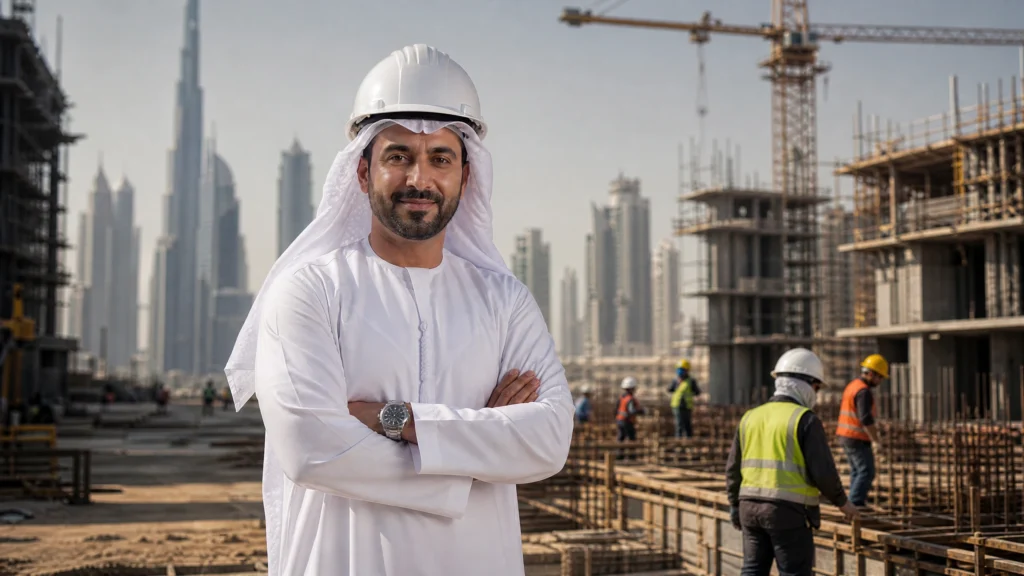
Construction is the backbone of the UAE’s rapid economic expansion. However, the complexity of large-scale projects often leads to friction between main contractors and subcontractors. At DubaiAdvocates.ae, under the leadership of Adv. Ibrahim Khaleel, we provide strategic legal counsel to navigate these turbulent waters. Understanding the nuances of UAE construction law, payment mechanisms, and dispute resolution forums like the Dubai Courts or DIAC is essential for any stakeholder looking to protect their commercial interests.
The Legal Framework Governing Construction Contracts in the UAE
The primary legislation governing the relationship between contractors and subcontractors is the UAE Civil Transactions Law (Federal Decree-Law No. 31 of 2021). This law contains specific provisions under the section on Muqawala (Contracts for Work), which defines the obligations, liabilities, and rights of parties involved in a construction project.
Key Legislative References:
- Federal Decree-Law No. 31 of 2021 (Civil Transactions Law): Replaces the older 1985 Code and provides updated rules on contractual equilibrium and termination.
- Federal Decree-Law No. 42 of 2022 (Civil Procedure Law): Governs how construction claims are litigated within the onshore UAE courts.
- Dubai Law No. 6 of 2019: Regarding the ownership of Jointly Owned Properties in the Emirate of Dubai, which often impacts payment flows in residential developments.
Common Causes of Contractor & Subcontractor Disputes
In our extensive experience at DubaiAdvocates.ae, disputes typically stem from a few recurring issues. Identifying these early is the first step toward effective dispute resolution.
1. Payment Delays and “Back-to-Back” Clauses
One of the most litigated areas in the Dubai Courts involves “pay-if-paid” or “pay-when-paid” clauses. While the Dubai Court of Cassation has historically recognized these as valid, the principle of Good Faith (Article 246 of the Civil Code) prevents a main contractor from using such clauses to indefinitely avoid payment if they have failed to pursue the employer for funds.
2. Variations and Scope Creep
Disputes often arise when a subcontractor performs additional work without a formal written instruction. Under UAE law, if the variation was necessary and the employer/contractor benefited, the subcontractor may be entitled to compensation under the principle of unjust enrichment.
3. Delays and Liquidated Damages
When a project falls behind schedule, the main contractor often attempts to pass down “Liquidated Damages” (LDs) to the subcontractor. However, UAE courts have the discretionary power to adjust these penalties if they are found to be excessive or if no actual damage occurred.
Understanding Jurisdiction: Where to Resolve the Conflict?
Selecting the right forum is critical. In the UAE, the jurisdiction is usually determined by the arbitration clause or the location of the project.
Dubai Courts (Onshore)
The Dubai Courts operate in Arabic and rely heavily on court-appointed experts. In complex technical disputes, the judge will appoint an engineering expert to review the site and the accounts. The expert’s report often forms the primary basis for the final judgment.
DIFC and ADGM Courts (Offshore)
The Dubai International Financial Centre (DIFC) and Abu Dhabi Global Market (ADGM) operate under an English-language, Common Law framework. These courts are favored for their international standards and the DIFC Law No. 6 of 2004 (Contract Law), which provides a more predictable outcome for international entities.
Arbitration (DIAC and ICC)
The Dubai International Arbitration Centre (DIAC) is the leading forum for private dispute resolution. The DIAC Arbitration Rules 2022 introduced more efficient procedures for multi-party disputes, which is common in contractor-subcontractor relationships involving multiple tiers.
The Role of the Engineer and Decennial Liability
In many UAE contracts, especially those based on FIDIC forms, the “Engineer” plays a quasi-judicial role in certifying payments and determining extensions of time. However, parties must be aware of Decennial Liability (Article 880 of the Civil Code). This is a mandatory 10-year strict liability for the total or partial collapse of a building, which applies to both the contractor and the consultant, regardless of fault.
Strategies for Mitigating Subcontractor Risks
Adv. Ibrahim Khaleel emphasizes that “prevention is the best form of litigation.” To safeguard your position, consider the following:
- Precise Drafting: Ensure that the “Condition Precedent” for payment is clearly defined.
- Documentation: Maintain a robust paper trail of “Notices of Delay” and “Variation Orders.”
- Interim Measures: Under the Federal Arbitration Law (Federal Law No. 6 of 2018), parties can approach the courts for interim measures, such as the attachment of assets, to secure a future award.
The Role of DubaiAdvocates.ae Lawyers and Legal Consultants
Navigating the intricacies of the Ministry of Energy and Infrastructure regulations and the specific local requirements of the Dubai Land Department (DLD) requires a seasoned hand. DubaiAdvocates.ae, led by Adv. Ibrahim Khaleel, offers:
- Contractual Audits: Reviewing subcontracts to identify “killer clauses” before they cause damage.
- Expert Representation: Representing clients before the Dubai Courts, DIFC, and ADGM with a focus on technical engineering evidence.
- Arbitration Advocacy: Acting as counsel in DIAC proceedings to ensure that the “Engineer’s” decisions are challenged or upheld correctly.
- Settlement Negotiations: Leveraging our deep understanding of UAE judicial trends to achieve favorable out-of-court settlements.
Overview
English
Contractor and subcontractor disputes in the UAE are primarily governed by the Civil Transactions Law and handled by Dubai Courts or arbitration centers like DIAC. Key issues include payment delays, back-to-back clauses, and liquidated damages. Proactive contract management and expert legal representation are essential to navigating these complexities and ensuring project continuity.
Arabic | العربية
تخضع النزاعات بين المقاولين والمقاولين الباطن في الإمارات بشكل أساسي لقانون المعاملات المدنية. يتم حل هذه النزاعات عادةً أمام محاكم دبي أو مراكز التحكيم مثل مركز دبي للتحكيم الدولي (DIAC). تشمل القضايا الرئيسية تأخيرات الدفع، وشروط “الدفع عند الاستلام”، والتعويضات الاتفاقية. إن الإدارة الاستباقية للعقود والتمثيل القانوني المتخصص ضروريان لتجاوز هذه التعقيدات وضمان استمرارية المشاريع.
French | Français
Les litiges entre entrepreneurs et sous-traitants aux EAU sont régis par la loi sur les transactions civiles. Ils sont résolus devant les tribunaux de Dubaï ou des centres d’arbitrage comme le DIAC. Les points de friction incluent les retards de paiement et les clauses de “paiement conditionnel”.
Russian | Русский
Споры между подрядчиками и субподрядчиками в ОАЭ регулируются Законом о гражданских сделках. Конфликты разрешаются в судах Дубая или через арбитраж (DIAC). Основные проблемы: задержки платежей и условия «оплата после получения».
Chinese | 中文
阿联酋承包商与分包商之间的纠纷主要受《民事交易法》管辖。争议通常通过迪拜法院或迪拜国际仲裁中心 (DIAC) 解决。核心问题包括付款延迟、背靠背条款和违约金。
Italian | Italiano
Le controversie tra appaltatori e subappaltatori negli Emirati Arabi Uniti sono regolate dalla legge sulle transazioni civili. Le questioni principali riguardano i ritardi nei pagamenti e le penali. La rappresentanza legale esperta è fondamentale.
Spanish | Español
Las disputas entre contratistas y subcontratistas en los EAU se rigen por la Ley de Transacciones Civiles. Los problemas comunes incluyen retrasos en los pagos y cláusulas de “pago contra pago”.
German | Deutsch
Streitigkeiten zwischen Haupt- und Subunternehmern in den VAE unterliegen dem Zivilgesetzbuch. Wichtige Themen sind Zahlungsverzug und Back-to-Back-Klauseln. Fachkundige rechtliche Vertretung ist entscheidend.
Hebrew | עברית
סכסוכים בין קבלנים לקבלני משנה באיחוד האמירויות מוסדרים בחוק העסקאות האזרחיות. הנושאים המרכזיים כוללים עיכובי תשלום וסעיפי “גב אל גב”. ייצוג משפטי מקצועי הוא חיוני.
Turkish | Türkçe
BİRLEŞİK Arap Emirlikleri’ndeki müteahhit ve alt yüklenici uyuşmazlıkları Medeni İşlemler Kanunu’na tabidir. Ödeme gecikmeleri ve “back-to-back” maddeleri en sık karşılaşılan sorunlardır.
Afrikaans | Afrikaans
Kontrakteur- en subkontrakteurdispute in die VAE word gereguleer deur die Wet op Siviele Transaksies. Belangrike kwessies sluit in betalingsvertragings en skadevergoeding.
Filipino | Filipino
Ang mga hindi pagkakaunawaan sa pagitan ng mga contractor at subcontractor sa UAE ay pinamamahalaan ng Civil Transactions Law. Mahalaga ang ekspertong legal na tulong sa mga usaping ito.
Frequently Asked Questions
What law governs construction contracts in the UAE?
The UAE Civil Transactions Law (Federal Decree-Law No. 31 of 2021) is the primary statute.
Are “back-to-back” payment clauses legal in Dubai?
Yes, they are generally enforceable, but they are subject to the principle of good faith.
Can a subcontractor sue the Employer directly?
Generally no, due to “privity of contract,” unless there is a direct assignment of rights.
How long do I have to file a construction claim?
Under the new law, the general limitation period for contractual claims is 5 years, though specific rules apply to latent defects.
What is Decennial Liability?
It is a mandatory 10-year liability period for structural defects in a building.
Does the Dubai Court use English?
No, onshore Dubai Courts use Arabic. DIFC and ADGM courts use English.
What is the role of a court-appointed expert?
They evaluate technical and financial evidence and provide a report to the judge.
Can I stop work if I am not paid?
This depends on the contract terms; stopping work without following the contract can lead to a breach claim.
Are oral instructions for variations binding?
It is risky; UAE law prefers written evidence, though “unjust enrichment” claims can sometimes be made.
What is DIAC?
The Dubai International Arbitration Centre, the region’s leading forum for resolving construction disputes.
Can liquidated damages be reduced by a judge?
Yes, if the amount is shown to be significantly higher than the actual loss suffered.
What happens if a contractor goes bankrupt?
Subcontractors may become unsecured creditors unless they have specific guarantees or charges.
Is mediation mandatory in the UAE?
Many courts now require a meeting with the Centre for Amicable Settlement of Disputes before litigation.
How do I enforce a DIFC judgment onshore?
There is a reciprocal enforcement mechanism between DIFC and Dubai Courts.
Who pays the legal fees in a Dubai Court case?
The losing party usually pays a nominal amount toward fees, but full recovery is rare compared to arbitration.
Sum-up
Contractor and subcontractor disputes in the UAE are a complex interplay of Federal Decree-Laws, local regulations, and specific contractual terms like those found in FIDIC. Whether dealing with payment delays, variation claims, or performance disputes, stakeholders must prioritize clear documentation and early legal intervention. Under the guidance of Adv. Ibrahim Khaleel, DubaiAdvocates.ae stands ready to provide the expertise and authority needed to protect your construction interests in the UAE’s dynamic legal environment.
Call to Action (CTA):
Email: file@dubaiadvocates.ae
Phone/WhatsApp: +971561663345
Website: https://dubaiadvocates.ae/
Disclaimer:
“This content is for general informational purposes only and does not constitute legal advice. For advice specific to your situation, consult a qualified legal professional in the UAE.”
Category
Get in touch
contact us
Send us a email
file@dubaiadvocates.ae
Contact with us
Our office location
Le Solarium Tower, Level 13, Office 13, Dubai Silicon Oasis, Dubai.
A licensed UAE law firm advising individuals and businesses across corporate law, criminal defence, real estate, employment, family law, and commercial disputes — throughout UAE onshore courts, DIFC, and ADGM.
pages
Working hour
- Monday - Friday
- 09:00 am - 07:00 pm