
Navigating the UAE Startup and SME Ecosystem
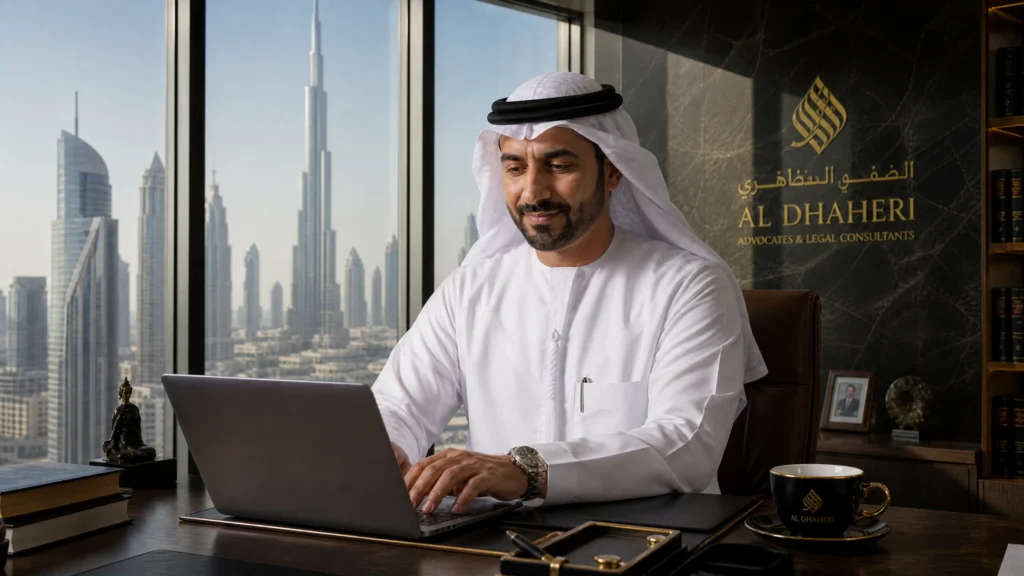
The United Arab Emirates has firmly established itself as a global nexus for innovation and entrepreneurship. With the visionary goal of becoming home to two million active companies by 2030, the legislative landscape has undergone transformative shifts to empower small and medium enterprises (SMEs). At DubaiAdvocates.ae, led by the strategic expertise of Adv. Ibrahim Khaleel, we understand that for a startup, the law is not merely a set of rules but a foundational framework for scalability, investment readiness, and risk mitigation.
Navigating the transition from a “garage-stage” idea to a multi-million-dirham enterprise requires more than just a business plan; it demands a robust legal architecture. Whether you are leveraging the flexible structures of the DIFC and ADGM or establishing a presence in the UAE mainland, understanding the nuances of local regulations is paramount to achieving long-term sustainability.
The Legal Pillars of Entrepreneurship in the UAE
The regulatory framework for smaller enterprises is primarily governed by a synergy of federal laws and emirate-specific initiatives. The Ministry of Economy plays a central role in implementing the National SME Programme, which offers a suite of incentives, from government procurement preferences to simplified licensing.
Federal Law No. 2 of 2014 on Small and Medium Projects and Enterprises
This landmark legislation serves as the constitutional backbone for the sector. It defines the classification of enterprises based on turnover and headcount, ensuring that “SME” status translates into tangible benefits. Under this law, the SME Council was established to coordinate federal and local efforts, ensuring a unified strategy for entrepreneurial growth.
Federal Decree-Law No. 32 of 2021 on Commercial Companies
The 2021 Companies Law—and its subsequent 2025 amendments—has been a game-changer for founders. Key highlights include:
- 100% Foreign Ownership: The removal of the requirement for a UAE National “local sponsor” in most mainland commercial activities.
- Multiple Classes of Shares: Startups can now issue different share classes (e.g., founder shares vs. investor shares) to manage voting rights and dividend distributions, a feature previously restricted to free zones.
- Drag-Along and Tag-Along Rights: These critical investor protections can now be embedded directly into the company’s Memorandum of Association (MOA), enhancing the enforceability of exit strategies.
Choosing the Right Jurisdiction: Mainland, Free Zones, and Financial Hubs
Selecting a jurisdiction is one of the most critical decisions an entrepreneur will make. Each forum offers distinct advantages depending on the business model.
1. Mainland (Department of Economy and Tourism – DET)
Establishing a company in the Dubai mainland allows for unrestricted trade across the UAE and direct participation in government tenders. With the recent legislative updates, the flexibility of mainland companies now rivals that of international hubs.
2. Dubai International Financial Centre (DIFC) and Abu Dhabi Global Market (ADGM)
For tech-driven startups and those seeking venture capital, these “common law” jurisdictions are often preferred.
- The DIFC Innovation License: Designed for startups in AI, Web3, and FinTech, offering subsidized fees and access to a world-class ecosystem.
- ADGM Tech Startup License: Provides a cost-effective pathway to incorporation with access to a sophisticated regulatory environment governed by the Financial Services Regulatory Authority (FSRA).
3. Specialised Free Zones
Zones like Dubai Silicon Oasis (DSO) and the Hub71 in Abu Dhabi cater specifically to technology and innovation, providing dedicated incubators and accelerators.
Corporate Tax and Financial Compliance for 2026
As of 2026, the UAE’s fiscal landscape has matured. Startups must be diligent in their compliance with Federal Decree-Law No. 47 of 2022 on the Taxation of Corporations and Businesses.
Small Business Relief (SBR)
Under Ministerial Decision No. 73 of 2023, eligible resident businesses with revenue below AED 3 million can elect for “Small Business Relief.” This allows the business to be treated as having no taxable income, effectively resulting in 0% corporate tax until the end of the 2026 tax period. However, this is not automatic; businesses must actively elect this relief during their tax filing via the Federal Tax Authority (FTA) portal.
Importance of Financial Record-Keeping
Even if a startup qualifies for 0% tax, the law mandates the maintenance of accurate financial records. Proactive compliance today prevents heavy penalties and ensures the “investor-ready” status required for future funding rounds.
Intellectual Property: Protecting the Startup’s Core Assets
For most SMEs, the value lies in their intangible assets. The UAE has modernized its IP laws to align with international standards, including:
- Federal Decree-Law No. 36 of 2021 on Trademarks: Offers broader protection and harsher penalties for infringement.
- Federal Decree-Law No. 11 of 2021 on Regulation and Protection of Industrial Property Rights: Essential for patenting new technologies and industrial designs.
Protecting your brand through the Ministry of Economy and ensuring that all employment contracts include “work-for-hire” and non-disclosure clauses are non-negotiable steps in safeguarding your competitive edge.
Navigating Financial Distress: The New Bankruptcy Law
The entrepreneur’s journey is rarely a straight line. Federal Decree-Law No. 51 of 2023 on Financial Restructuring and Bankruptcy introduces a more compassionate and efficient framework for businesses in trouble.
- Preventive Settlement: A court-supervised process that allows a debtor to reach a settlement with creditors before reaching the point of insolvency.
- Specialised Bankruptcy Court: A dedicated judicial body ensures that restructuring cases are handled by experts, focusing on business continuity rather than liquidation.
Key Scenarios and Practical Legal Considerations
“We are a tech startup looking for Seed funding. Should we incorporate in the Mainland or a Free Zone?”
While the Mainland now offers 100% ownership, many VCs still prefer DIFC or ADGM due to the familiarity of their common law frameworks and the ease of issuing “convertible notes” or “SAFE” (Simple Agreement for Future Equity) instruments.
“Can an SME participate in Dubai Government procurement?”
Yes. Through the Dubai SME (Mohammed Bin Rashid Establishment for SME Development), registered members are entitled to a percentage of government contracts and exemptions from certain licensing fees.
“What happens if my business partner wants to exit?”
Under the amended Commercial Companies Law, the articles of association can now include clear succession and share-transfer mechanisms. We highly recommend a separate Shareholders’ Agreement (SHA) to detail dispute resolution and valuation methodologies.
The Role of DubaiAdvocates.ae Lawyers and Legal Consultants
At DubaiAdvocates.ae, we do not just provide legal templates; we provide strategic partnership. Adv. Ibrahim Khaleel and our team of expert legal consultants bridge the gap between complex UAE regulations and the practical needs of a growing business.
Our services include:
- Jurisdictional Strategy: Advising on the optimal setup (Mainland vs. Free Zone) based on your target market.
- Corporate Governance: Drafting bespoke MOAs and Shareholders’ Agreements that protect founders’ rights.
- Regulatory Compliance: Navigating Corporate Tax, AML (Anti-Money Laundering), and ESR (Economic Substance Regulations).
- Dispute Resolution: Representing clients before the Dubai Courts, DIFC Courts, or in DIAC Arbitration should conflicts arise.
Overview
English:
The UAE provides a robust legal framework for startups through the Commercial Companies Law and specialized SME legislation. Key benefits include 100% foreign ownership, Small Business Tax Relief for revenues under AED 3M, and advanced intellectual property protections. Choosing between Mainland, DIFC, or ADGM jurisdictions is crucial for scaling and investment.
Arabic:
توفر دولة الإمارات العربية المتحدة إطاراً قانونياً قوياً للشركات الناشئة من خلال قانون الشركات التجارية وتشريعات المشاريع الصغيرة والمتوسطة. تشمل المزايا الرئيسية الملكية الأجنبية بنسبة 100%، وتسهيلات ضريبية للأعمال الصغيرة التي يقل دخلها عن 3 ملايين درهم، وحماية متطورة للملكية الفكرية. يعد الاختيار بين المناطق الحرة (مثل مركز دبي المالي العالمي) والمناطق داخل الدولة أمراً حيوياً للنمو وجذب الاستثمار.
French:
Les Émirats arabes unis offrent un cadre juridique solide pour les startups via la loi sur les sociétés commerciales. Les avantages incluent la propriété étrangère à 100 %, l’allégement fiscal pour les PME et la protection de la propriété intellectuelle.
Russian:
ОАЭ предоставляют надежную правовую базу для стартапов. Ключевые преимущества включают 100% иностранное владение, налоговые льготы для малого бизнеса и защиту интеллектуальной собственности.
Chinese:
阿联酋通过《商业公司法》为初创企业提供强大的法律框架。主要优势包括 100% 外资所有权、针对营收低于 300 万迪拉姆的小微企业税务减免以及完善的知识产权保护。
Italian:
Gli Emirati Arabi Uniti offrono un solido quadro legale per le startup. I vantaggi includono la proprietà straniera al 100%, agevolazioni fiscali per le piccole imprese e protezione della proprietà intellettuale.
Spanish:
Los Emiratos Árabes Unidos ofrecen un marco legal sólido para las empresas emergentes. Los beneficios incluyen la propiedad extranjera al 100%, alivio fiscal para pequeñas empresas y protección de la propiedad intelectual.
German:
Die VAE bieten einen soliden rechtlichen Rahmen für Start-ups. Zu den Vorteilen gehören 100 % ausländisches Eigentum, Steuererleichterungen für Kleinunternehmen und der Schutz des geistigen Eigentums.
Hebrew:
איחוד האמירויות מספקת מסגרת משפטית איתנה לסטארט-אפים. היתרונות כוללים בעלות זרה מלאה, הקלות מס לעסקים קטנים והגנה על קניין רוחני.
Turkish:
BAE, girişimler için güçlü bir yasal çerçeve sunmaktadır. %100 yabancı mülkiyeti, küçük işletmeler için vergi muafiyeti ve fikri mülkiyet koruması temel avantajlardır.
Afrikaans:
Die VAE bied ‘n robuuste regsraamwerk vir nuwe ondernemings. Voordele sluit in 100% buitelandse eienaarskap, belastingverligting vir klein ondernemings en beskerming van intellektuele eiendom.
Filipino:
Ang UAE ay nagbibigay ng matibay na legal na balangkas para sa mga startup. Kabilang sa mga benepisyo ang 100% dayuhang pagmamay-ari, tax relief para sa maliliit na negosyo, at proteksyon sa intellectual property.
Frequently Asked Questions
What defines an SME in the UAE?
In the UAE, an SME is typically classified based on its headcount and annual turnover, as defined by the Ministry of Economy.
Can I open a startup in Dubai without a local partner?
Yes, under the 2021 Commercial Companies Law, most activities allow for 100% foreign ownership on the mainland.
What is the “Entrepreneurial Nation” initiative?
It is a government program designed to provide startups with mentorship, funding access, and market expansion opportunities.
Do I need to register for Corporate Tax if I am a small startup?
Yes, all businesses must register for Corporate Tax with the Federal Tax Authority, even if they qualify for 0% tax.
How long is the Small Business Relief available?
Currently, the relief is available for tax periods ending on or before 31 December 2026.
Can I set up a business in a Free Zone and trade in the Mainland?
Generally, Free Zone companies require a local agent or a branch license to trade directly in the mainland.
What is the minimum capital required for a startup?
The law states capital must be sufficient for the company’s purpose; there is no fixed minimum for LLCs, though specific activities may differ.
How can I protect my app’s code in the UAE?
You can protect it through Copyright registration and robust IP clauses in developer contracts.
What are “Virtual Licenses”?
Some authorities offer licenses that allow founders to start a business without a physical office initially.
What is the Golden Visa for Entrepreneurs?
It is a long-term residency visa (10 years) for founders of successful projects or those with an idea approved by an official incubator.
Can I use my home as an office for a new SME?
Specific license types, such as the “Tajer Dubai” or certain free zone licenses, allow for home-based operations.
Are there special courts for business disputes?
The UAE has commercial circuits in its civil courts, and the DIFC/ADGM offer specialized commercial courts.
How do I issue shares to an investor?
This is done through an amendment to the MOA and registration with the relevant licensing authority (DET or Free Zone).
What is an Innovation License?
A specialized license offered by hubs like DIFC to support tech-driven and innovative startups at a lower cost.
Can an SME be liquidated if it fails?
Yes, but the new Bankruptcy Law prioritizes restructuring and “Preventive Settlement” to help the business survive.
Sum-up
The UAE’s commitment to fostering a world-class SME ecosystem is evident in its progressive legislative reforms. From flexible corporate structures and 100% foreign ownership to supportive tax regimes and specialized bankruptcy protections, the legal environment is designed to nurture growth. However, success depends on proactive compliance and strategic legal planning. By aligning with the right jurisdiction and safeguarding intellectual assets, founders can transform their vision into a sustainable enterprise.
Email: file@dubaiadvocates.ae
Phone/WhatsApp: +971561663345
Website: https://dubaiadvocates.ae/
Get in touch
contact us
+971561663345
Send us a email
file@dubaiadvocates.ae
Contact with us
+971561663345
Our office location
Le Solarium Tower, Level 13, Office 13, Dubai Silicon Oasis, Dubai.
A licensed UAE law firm advising individuals and businesses across corporate law, criminal defence, real estate, employment, family law, and commercial disputes — throughout UAE onshore courts, DIFC, and ADGM.
Working hour
- Monday - Friday
- 09:00 am - 07:00 pm