- +971561663345
- file@dubaiadvocates.ae
- Mon-Fri 9:00 am - 7:00 pm

Capital Flows and Cross-Border Business Ventures in the UAE
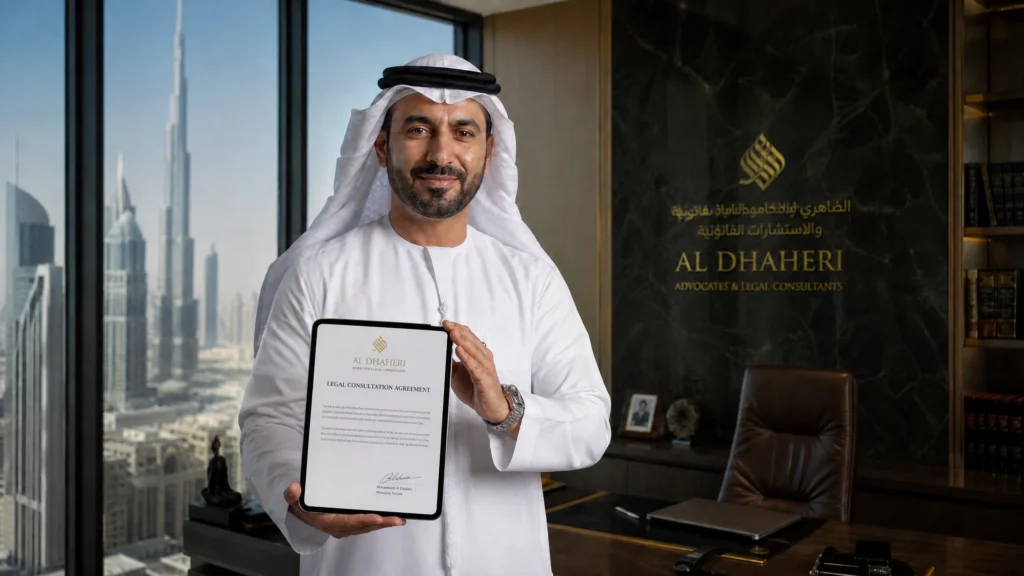
The landscape for global capital allocation and cross-border commercial structuring has experienced a historic paradigm shift over the last few years. As a premier global corporate, logistical, and financial hub, the United Arab Emirates (UAE) has systematically dismantled long-standing restrictions on international capital integration. Driven by forward-thinking legislative updates and the strategic vision of the nation’s leadership, the legal mechanisms governing corporate setups have transitioned into an open market, highly competitive model.
Under the guidance of Adv. Ibrahim Khaleel, a distinguished legal professional with over 15 years of deep practice in the corporate and dispute landscape of the region, DubaiAdvocates.ae handles complex cross-border corporate formations, multijurisdictional regulatory compliance, and cross-border commercial dispute resolution. Navigating this updated ecosystem demands a highly sophisticated understanding of statutory obligations, local regulatory mandates, and the distinct institutional jurisdictions that govern inbound business operations. This comprehensive legal analysis serves as an authoritative operational guide for institutional market entrants and multinational enterprises planning deployment in the UAE.
Evolution of the Legal Architecture: Shifting to Full Equity Control
Historically, international market entrants seeking to establish a commercial footprint on the UAE mainland were restricted by structural limits on equity allocation. The classic corporate regime mandated that local citizens or wholly local-owned corporate entities must possess a majority stake of at least 51% in any limited liability company established onshore. This structural requirement acted as a significant protective barrier for local industry, but created multi-layered corporate drafting arrangements to protect the financial upside and operational control of international market entrants.
The legislative landscape changed completely with the implementation of Federal Decree-Law No. 32 of 2021 on Commercial Companies. This statute fundamentally restructured the legal framework for onshore business operations by entirely modernizing the equity allocation restrictions. Most importantly, it dismantled the mandatory local majority equity ownership requirement across a vast cross-section of economic and commercial activities.
To maintain this momentum, the legislative framework was further modernized by Federal Decree-Law No. 20 of 2025, which amended key portions of the 2021 Commercial Companies Law. These latest updates have introduced stronger protections for minority shareholders, enhanced capital structure flexibility, modernized corporate governance expectations, and formalized corporate re-domiciliation pathways across different Emirates or between onshore jurisdictions and economic free zones.
Onshore entities are now granted unprecedented regulatory flexibility, transforming the mainland from a restricted, sponsor-dependent model into an open, highly accessible marketplace. International companies can now establish fully controlled corporate subsidiaries, expand industrial operations, and maintain complete operational autonomy without navigating complex side-agreements or passive local sponsorship structures.
Demarcating Permissible Activities from Strategic Sectors
The transition to full equity control for international market entrants is broad, but it is not completely unrestricted. The federal state retains structural oversight over essential public sectors to preserve macroeconomic stability, national security, and key domestic infrastructure.
The Strategic Impact Doctrine
Under the statutory framework of the Commercial Companies Law, certain economic sectors are categorized as having a “strategic impact.” The definitive parameters governing these restricted domains are governed under Cabinet Resolution No. 55 of 2021. Economic sectors that remain subject to strict local equity participation requirements, localized director controls, or explicit regulatory approval caps include:
- Defense, Security, and Military Industries: Any business venture involving the manufacture, distribution, or logistics of security systems, defense materiel, or military equipment.
- Banking, Finance, and Systemic Monies: Retail banking, investment banking, asset management, and currency exchange mechanisms operating on the mainland remain restricted to ensure domestic financial security.
- Insurance and Reinsurance Infrastructure: Onshore underwriting, insurance brokerage, and systemic risk mitigation vehicles.
- Telecommunications Networks: Core telecommunications, satellite operations, and primary data transmission infrastructures.
- Currency Printing and Monetary Operations: Direct engagement with physical tender, state minting, and national security print systems.
Emirate-Level Discretion and Activity Portals
While federal law establishes the overarching strategic framework, individual Emirates retain significant regulatory autonomy regarding localized implementation. Each local economic authority determines the exact list of commercial, industrial, and professional activities permitted for full international ownership within its borders.
In Dubai, the Department of Economy and Tourism (DET) serves as the primary licensing authority. The DET manages an active digital repository detailing thousands of distinct operational activities where full ownership is allowed. International enterprises must perform a precise administrative cross-reference against these DET activity portals during the initial structuring phase to ensure their corporate objectives align perfectly with permitted activities.
Dual Jurisdiction Dynamics: Onshore vs. Financial Free Zones
A fundamental element of structuring international capital deployment in the UAE is navigating the dual-jurisdiction framework. The country features a unique legal architecture where distinct legal traditions and institutional networks operate right alongside one another.
Onshore Jurisdiction (The Mainland)
Onshore operations are governed primarily by UAE Federal Laws and individual Emirate-level decrees. The legal architecture is built on a civil law tradition, with codified statutes serving as the primary source of law. Onshore entities licensed by the DET enjoy unrestricted access to the entire domestic marketplace, can bid directly on government procurement contracts, and face no structural barriers when expanding their geographic footprint across the local market.
Financial Free Zones: DIFC and ADGM
Operating as completely independent legal ecosystems inside the federal state, the Dubai International Financial Centre (DIFC) and the Abu Dhabi Global Market (ADGM) offer a fundamentally different environment. These financial free zones have their own autonomous, English common law legal frameworks, independent judiciaries, and bespoke regulatory authorities, such as the DIFC Authority and the DIFC Courts.
Choosing between these distinct jurisdictions involves strategic trade-offs regarding operational goals and dispute resolution preferences:
Operational Variable | Onshore Mainland Jurisdiction | Financial Free Zone (DIFC / ADGM) |
Primary Substantive Law | UAE Federal Statutes & Civil Codes | Codified English Common Law Principles |
Licensing & Regulatory Body | Department of Economy and Tourism (DET) | DIFC / ADGM Autonomous Authorities |
Geographic Market Access | Direct and unhindered access to the entire UAE domestic market | Restricted to free zone boundaries; requires local agents for onshore trade |
Judicial Dispute Forum | Dubai Courts / UAE Federal Judiciaries | DIFC Courts / ADGM Courts |
Language of Court Proceedings | Arabic (Mandatory for all submissions) | English (Primary language for all filings) |
Corporate Structure Variety | Statutory LLCs, Joint Stock Formations, Branches | Holding Companies, Foundations, SPVs, SPACs |
Institutional Regulatory Supervision
Successful market entry and ongoing compliance require close coordination with a variety of federal and local regulatory bodies, depending on the nature of the business activities.
The Ministry of Economy
The Ministry of Economy acts as the primary federal regulator overseeing macro-commercial policies across the country. The Ministry maintains the primary Foreign Direct Investment Dashboard, tracks beneficial ownership data, establishes compliance rules for anti-money laundering (AML), and manages corporate re-domiciliation filings at the federal level.
The Central Bank of the UAE and the Securities and Commodities Authority (SCA)
For any business model that involves asset management, fintech deployment, payment processing, or raising public capital, oversight moves to specialized federal entities. The Central Bank of the UAE exercises absolute regulatory control over commercial banking platforms, stored-value facilities, and large-scale clearing houses.
Concurrently, the Securities and Commodities Authority (SCA) regulates public listing compliance, private placements, commodity markets, and investment advisory operations. Under the latest updates introduced by Federal Decree-Law No. 20 of 2025, the SCA has expanded authority over capital adjustments and private venture placements for private joint-stock entities.
Individual Emirate Registrars and Free Zone Managements
Beyond federal oversight, the actual legal existence of a corporate entity is sustained through localized registries. Onshore, this is managed by the DET or corresponding economic departments in other Emirates. In the free zones, independent corporate registries manage incorporation, track Ultimate Beneficial Ownership (UBO) disclosures, and enforce local corporate governance mandates.
Navigating Real Estate Assets and Inbound Capital Realities
For many global corporate groups and high-net-worth individuals, direct or indirect real estate acquisition represents a key component of market entry. Navigating real estate investments requires a clear understanding of the specific rules governing land registration and property ownership.
In Dubai, real estate transactions are strictly regulated under Dubai Law No. 7 of 2006 concerning Real Property Registration in the Emirate of Dubai. The statutory text explicitly distinguishes between citizens of the Gulf Cooperation Council (GCC) and international buyers:
- GCC Nationals and Wholly Local-Owned Entities: Enjoy unrestricted rights to own freehold title to any real estate asset located within the geographical boundaries of the Emirate.
- International Investors and Outside Corporate Formations: Are legally restricted to acquiring real property rights—including absolute freehold ownership, long-term usufructs, or leasehold interests extending up to 99 years—strictly within designated areas designated by the Ruler of the Emirate of Dubai. These designated zones are commonly referred to as “Freehold Areas.”
The administrative gatekeeper for these transactions is the Dubai Land Department (DLD). The DLD processes all title registrations, issues official ownership certificates, and verifies that corporate entities attempting to purchase real estate assets in freehold areas are structured properly.
International investors must also be aware that onshore corporations with international shareholders cannot buy real property outside freehold zones. Even within freehold zones, specific rules apply to holding properties through offshore structures or corporate vehicles like DIFC Foundations, requiring careful pre-transaction planning and structuring.
Key Scenarios and Practical Challenges facing Market Entrants
Scenario A: Restructuring Historical Side-Agreements and Nominations
Many international corporate entities that entered the UAE market before recent legislative changes still operate under historic corporate structures. These setups typically involve a “Nominee Agreement” or “Side Agreement,” where a local national holds 51% of the shares as a passive partner, while the international investor retains operational control and handles all funding.
With the removal of mandatory local ownership requirements for most business activities, these legacy arrangements are no longer necessary. International entities now regularly face the task of winding down these nomination structures and transferring the 51% shareholding directly back to the international parent company.
This transition requires careful legal handling. Safely unwinding a legacy nomination structure requires a thorough audit of the original side agreements, settling any outstanding commercial balances with the local sponsor, obtaining clear, notarized share transfer instruments, and formally updating the corporate Memorandum of Association (MoA) through the DET.
If a dispute arises during this process, the parties must turn to specialized dispute forums. Resolving these challenges requires highly targeted advocacy before the Dubai Courts or specialized commercial arbitration tribunals to confirm the true beneficial ownership of the shares and enforce the transfer without interrupting ongoing business operations.
Scenario B: Resolving Complex Onshore Commercial Disputes
When a multi-shareholder onshore entity faces internal management deadlock or contractual breaches by local distributors, international investors must choose the right forum for resolution. Because mainland commercial companies are governed by civil law, structural disputes must be filed before the Dubai Courts.
Litigation before the onshore Dubai Courts is conducted entirely in Arabic, and all evidentiary documentation must be formally translated by a certified professional. The court relies heavily on specialized judicial experts to review financial ledgers, corporate minutes, and operational trail data.
Alternatively, if the company’s constitutional documents include a properly drafted arbitration clause, the dispute can be directed to the Dubai International Arbitration Centre (DIAC). This allows the parties to conduct proceedings in English and select specialized international arbitrators, providing a more predictable and private forum for resolving complex corporate deadlocks.
Scenario C: Utilizing the Free Zone Opt-In Framework for Dispute Resolution
A highly valuable tactical tool for international market entrants operating on the mainland is the ability to choose an alternative jurisdiction for dispute resolution. Even if a business is located onshore and licensed by the DET, the contracting parties can explicitly agree to use the jurisdiction of the DIFC Courts to govern their commercial agreements.
This “opt-in” mechanism allows onshore commercial ventures to bypass traditional civil litigation and instead resolve contract disputes within the English common law framework of the DIFC. The DIFC Courts provide access to streamlined summary judgment procedures, specialized commercial judges, and a highly predictable legal environment. This serves as a strong risk-mitigation tool for international capital allocators who may not be fully familiar with regional civil law court procedures.
The Strategic Role of DubaiAdvocates.ae
Navigating the intricacies of corporate structuring, regulatory compliance, and cross-border risk management in the UAE demands seasoned legal counsel. DubaiAdvocates.ae, under the active guidance of Adv. Ibrahim Khaleel, provides highly specialized legal support for multinational corporations, institutional funds, and international entrepreneurs.
Our corporate practice handles every phase of market entry and operational growth:
- Structural Optimization: Analysing business activities to secure full equity control while maintaining compliance with federal strategic impact rules.
- Corporate Restructuring: Safely unwinding outdated passive sponsorship models and managing formal share transfers and MoA amendments.
- Regulatory Compliance: Managing complex licensing processes with the DET, Central Bank, SCA, and free zone registries.
- Cross-Border Dispute Advocacy: Providing robust representation before the Arabic-language Dubai Courts, the English-language DIFC and ADGM forums, and international arbitration tribunals like DIAC.
Overviews
English
The UAE legal framework for cross-border capital deployment has evolved into a highly competitive system, driven by Federal Decree-Law No. 32 of 2021 and the key amendments of Federal Decree-Law No. 20 of 2025. For most commercial and industrial activities, the historical requirement for a 51% local citizen shareholder has been removed, allowing international market entrants to enjoy 100% equity control over mainland entities. However, restricted strategic sectors—such as defense, banking, and telecommunications—remain subject to strict local ownership caps under Cabinet Resolution No. 55 of 2021. Investors must also carefully choose between the civil law framework of the onshore mainland and the English common law systems of financial free zones like the DIFC. Navigating corporate setups, real estate assets under Dubai Law No. 7 of 2006, and legacy sponsor restructuring requires experienced corporate counsel to ensure full regulatory compliance.
Arabic (ملخص باللغة العربية)
تطور الإطار القانوني لدخول الرساميل الأجنبية وتأسيس الشركات في دولة الإمارات إلى نموذج تنافسي متقدم، مدفوعاً بمرسوم بقانون اتحادي رقم (32) لسنة 2021 بشأن الشركات التجارية والتعديلات الجوهرية الواردة في مرسوم بقانون اتحادي رقم (20) لسنة 2025. حيث تم إلغاء الشرط التاريخي الذي كان يلزم بوجود شريك مواطن يمتلك 51% من الأسهم في معظم الأنشطة التجارية والصناعية، مما أتاح للمستثمر الأجنبي تملك الشركات البرية (المحلية) بنسبة 100%. ومع ذلك، تظل القطاعات ذات الأثر الاستراتيجي مثل الدفاع، والخدمات المصرفية، والاتصالات مقيدة بنسب تملك محددة وفقاً لقرار مجلس الوزراء رقم (55) لسنة 2021. ويتعين على الشركات الاختيار بدقة بين النظام القانوني المدني في الميدان البري وأنظمة القانون العام الإنجليزي في المناطق الحرة المالية مثل مركز دبي المالي العالمي (DIFC). إن إعادة هيكلة العقود القديمة وإدارة الأصول العقارية وفقاً لقانون رقم (7) لسنة 2006 بشأن التسجيل العقاري في إمارة دبي تتطلب استشارات قانونية متخصصة لضمان الامتثال التام.
French(Résumé en Français)
Le cadre juridique des investissements aux Émirats Arabes Unis s’est transformé en un système hautement compétitif, régi par le Décret-Loi Fédéral No. 32 de 2021 et les amendements du Décret-Loi Fédéral No. 20 de 2025. Pour la majorité des activités, l’obligation d’un actionnaire local à 51% est abolie, permettant une propriété étrangère à 100% sur le mainland. Néanmoins, les secteurs stratégiques (défense, banque, télécoms) restent restreints par la Résolution du Cabinet No. 55 of 2021. Les investisseurs doivent choisir entre le droit civil onshore et le common law anglais des zones franches comme le DIFC. La restructuration des anciens contrats et l’acquisition immobilière sous la Loi No. 7 de 2006 à Dubaï exigent une expertise juridique rigoureuse.
Russian (Резюме на русском)
Правовая база для иностранных инвестиций в ОАЭ превратилась в высококонкурентную систему благодаря Федеральному закону-декрету № 32 от 2021 года и изменениям, внесенным Законом-декретом № 20 от 2025 года. Для большинства видов коммерческой деятельности было отменено требование о обязательном участии местного спонсора с долей 51%, что открыло путь к 100% иностранному владению компаниями на материковой части (mainland). Однако стратегические сектора (оборона, банковское дело, телекоммуникации) остаются ограниченными согласно Резолюции Кабинета министров № 55 от 2021 года. Инвесторам необходимо четко разграничивать юрисдикцию гражданского права материка и систему английского общего права финансовых фризон, таких как DIFC. Реструктуризация исторических номинальных структур и приобретение недвижимости в соответствии с Законом Дубая № 7 от 2006 года требуют профессионального юридического сопровождения.
Chinese (中文摘要)
阿联酋针对外国投资和企业设立的法律框架已演变为一个极具竞争力的体系,这主要得益于2021年第32号联邦法令以及2025年第20号联邦法令的重要修订。对于大多数商业和工业活动,过去要求本地公民持股51%的传统限制已被废除,允许外国投资者在本土(Mainland)享有100%的股权控制。然而,根据2021年第55号内阁决议,国防、银行和电信等具有战略影响的受限行业仍受严格的本地持股比例限制。投资者还必须在本土民法框架与迪拜国际金融中心(DIFC)等金融自由区的英国普通法体系之间做出审慎选择。在处理企业设立、根据2006年迪拜第7号法律进行房地产资产配置以及清算历史代持协议时,企业必须依靠资深法律顾问以确保完全合规。
Italian (Riepilogo in Italiano)
Il quadro giuridico degli Emirati Arabi Uniti per gli investimenti esteri si è evoluto in un sistema altamente competitivo, strutturato dal Decreto-Legge Fedeale N. 32 del 2021 e dai successivi emendamenti del Decreto-Legge Fedeale N. 20 del 2025. Per la maggior parte delle attività commerciali, l’obbligo del socio locale al 51% è stato eliminato, consentendo il 100% di proprietà straniera sul mainland. Tuttavia, i settori strategici come difesa, banche e telecomunicazioni rimangono limitati ai sensi della Risoluzione del Gabinetto N. 55 del 2021. Gli investitori devono valutare attentamente la transizione tra il diritto civile onshore e il common law inglese delle zone franche come il DIFC. La ristrutturazione dei vecchi contratti di sponsorizzazione e la gestione immobiliare ai sensi della Legge di Dubai N. 7 del 2006 richiedono una consulenza legale qualificata.
Spanish (Resumen en Español)
El marco legal de los Emiratos Árabes Unidos para la inversión extranjera se ha transformado en un sistema competitivo de vanguardia, impulsado por el Decreto-Ley Federal Nº 32 de 2021 y las enmiendas del Decreto-Ley Federal Nº 20 de 2025. Se ha abolido el requisito histórico de contar con un socio local con el 51% de las acciones en la mayoría de las actividades comerciales, permitiendo un 100% de propiedad extranjera en el mainland. No obstante, los sectores de impacto estratégico (defensa, banca, telecomunicaciones) siguen regulados por la Resolución del Gabinete Nº 55 de 2021. Los inversores deben elegir estratégicamente entre el derecho civil onshore y el common law inglés de zonas francas financieras como el DIFC. La reestructuración de acuerdos anteriores y la adquisición de inmuebles bajo la Ley Nº 7 de 2006 de Dubái requieren asesoramiento legal especializado.
German (Zusammenfassung auf Deutsch)
Der rechtliche Rahmen für ausländische Investitionen in den VAE hat sich durch das Bundesdekret-Gesetz Nr. 32 von 2021 und die Änderungen des Bundesdekret-Gesetzes Nr. 20 von 2025 zu einem hochentwickelten System gewandelt. Für die meisten kommerziellen Aktivitäten wurde die historische Verpflichtung eines lokalen 51%-Mehrheitsgesellschafters abgeschafft, was eine 100%ige ausländische Eigenkapitalkontrolle auf dem Mainland ermöglicht. Strategische Sektoren wie Verteidigung, Banken und Telekommunikation bleiben jedoch gemäß dem Kabinettsbeschluss Nr. 55 von 2021 beschränkt. Investoren müssen sorgfältig zwischen dem Zivilrecht des Mainlands und dem englischen Common Law in Finanzfreizonen wie dem DIFC wählen. Die Umrukturierung von Altvoverträgen und der Immobilienerwerb nach dem Dubai-Gesetz Nr. 7 von 2006 erfordern eine spezialisierte Rechtsberatung.
Hebrew (סיכום בעברית)
המסגרת המשפטית להשקעות זרות באיחוד האמירויות הפכה למערכת תחרותית ומתקדמת ביותר, מכוח צו-חוק פדרלי מס’ 32 משנת 2021 והתיקונים המשמעותיים של צו-חוק פдерלי מס’ 20 משנת 2025. עבור רוב הפעילויות המסחריות, הדרישה ההיסטורית לשותף מקומי המחזיק ב-51% מהמניות בוטלה, מה שמאפשר למשקיעים בינלאומיים ליהנות מבעלות מלאה (100%) על חברות במיין-לנד (Mainland). יחד עם זאת, מגזרים בעלי השפעה אסטרטגית כמו ביטחון, בנקאות ותקשורת נותרו מוגבלים תחת החלטת הקבינט מס’ 55 משנת 2021. על המשקיעים לבחור בקפידה בין המשפט האזרחי הנוהג במיין-לנד לבין מערכת המשפט המקובל האנגלי (Common Law) באזורים פיננסיים חופשיים כמו ה-DIFC. ארגון מחדש של הסכמי נציגות ישנים ורכישת נכסים בהתאם לחוק דובאי מס’ 7 משנת 2006 דורשים ליווי משפטי מקצועי.
Turkish(Türkçe Özet)
BAE’nin yabancı yatırımlara yönelik yasal çerçevesi, 2021 tarihli ve 32 sayılı Federal Kararname-Kanun ve 2025 tarihli ve 20 sayılı Federal Kararname-Kanun ile getirilen önemli değişiklikler doğrultusunda oldukça rekabetçi bir yapıya kavuşmuştur. Ticari ve sınai faaliyetlerin büyük bir kısmında, geçmişte uygulanan %51 yerel ortak şartı kaldırılarak yabancı yatırımcılara anakarada (mainland) %100 hisse kontrolü imkanı tanınmıştır. Ancak; savunma, bankacılık ve telekomünikasyon gibi stratejik sektörler, 2021 tarihli ve 55 sayılı Kabine Kararı uyarınca kısıtlamalara tabi kalmaya devam etmektedir. Yatırımcıların, anakaradaki kara Avrupası hukuk düzeni ile DIFC gibi finansal serbest bölgelerdeki İngiliz genel hukuku (Common Law) sistemleri arasında stratejik bir seçim yapması gerekir. Eski ortaklık yapılarının tasfiyesi ve 2006 tarihli 7 sayılı Dubai Kanunu kapsamındaki gayrimenkul edinimleri uzman bir hukuki danışmanlık gerektirir.
Afrikaans (Afrikaanse Opsomming)
Die regraamwerk vir buitelandse investering in die VAE het ontwikkel in ‘n hoogs mededingende stelsel, aangedryf deur Federale Dekreet-Wet No. 32 van 2021 en die wysigings van Federale Dekreet-Wet No. 20 van 2025. Vir die meeste kommersiële aktiwiteite is die historiese vereiste van ‘n 51% plaaslike aandeelhouer afgeskaf, wat buitelandse entrepreneurs toelaat om 100% eienaarskap op die vasteland (mainland) te verkry. Strategiese sektore soos verdediging, bankwese en telekommunikasie bly egter beperk kragtens Kabinetsresolusie No. 55 van 2021. Beleggers moet noukeurig kies tussen die siviele regstelsel van die vasteland en die Engelse gemenereg (Common Law) van finansiële vrysones soos die DIFC. Die herstrukturering van historiese nominasie-ooreenkomste en eiendomsverkryging kragtens Dubai Wet No. 7 van 2006 vereis ervare regshulp vir volle nakoming.
Filipino (Buod sa Filipino)
Ang legal na balangkas ng UAE para sa dayuhang pamumuhunan ay naging isang napakahusay at mabilis na sistema, dulot ng Federal Decree-Law No. 32 of 2021 at mga susog sa ilalim ng Federal Decree-Law No. 20 of 2025. Sa karamihan ng mga komersyal na aktibidad, ang lumang patakaran na nag-aatas ng 51% lokal na kasosyo ay inalis na, kaya pinapayagan na ang 100% dayuhang pagmamay-ari sa mainland. Gayunpaman, ang mga estratehikong sektor tulad ng depensa, pagbabangko, at telekomunikasyon ay nananatiling limitado sa ilalim ng Cabinet Resolution No. 55 of 2021. Dapat pumili nang maayos ang mga mamumuhunan sa pagitan ng sistemang Civil Law sa mainland at English Common Law sa mga financial free zone tulad ng DIFC. Ang pag-aayos ng mga lumang kontrata ng sponsorship at pagbili ng ari-arian sa ilalim ng Dubai Law No. 7 of 2006 ay nangangailangan ng ekspertong legal na gabay upang matiyak ang pagsunod sa batas.
Frequently Asked Questions
1. Can an international corporation own 100% of a mainland enterprise in Dubai?
Yes. Under Federal Decree-Law No. 32 of 2021 on Commercial Companies, the historic mandate requiring a 51% UAE national shareholder has been removed for a vast majority of commercial and industrial activities, allowing complete international equity ownership.
2. What business operations are classified as restricted strategic sectors?
As detailed in Cabinet Resolution No. 55 of 2021, restricted strategic sectors include telecommunications networks, defense and military installations, retail banking and corporate finance, insurance infrastructure, and currency printing operations.
3. How do the 2025 legislative updates affect private companies in the UAE?
Federal Decree-Law No. 20 of 2025 introduced enhanced protections for minority shareholders, formalized the legal framework for corporate re-domiciliation, expanded directors’ duties regarding related-party transactions, and streamlined capital adjustment mechanisms.
4. What is the fundamental jurisdictional difference between the Dubai Mainland and the DIFC?
The Dubai Mainland is governed by UAE Federal Codes and operates under a civil law tradition where all court proceedings are in Arabic. Conversely, the DIFC is an independent financial free zone operating under an English common law framework with English-language court systems.
5. Can an onshore mainland business choose to use the DIFC Courts for dispute resolution?
Yes. Onshore enterprises can explicitly incorporate an “opt-in” jurisdiction clause in their commercial agreements, choosing the English-language DIFC Courts as the exclusive forum for contract disputes.
6. Where are corporate deadlocks between international partners on the mainland resolved?
If a valid arbitration agreement is in place, corporate disputes are typically directed to the Dubai International Arbitration Centre (DIAC). In the absence of an arbitration clause, the civil divisions of the Dubai Courts retain primary jurisdiction.
7. Are international individuals permitted to buy real estate assets anywhere in Dubai?
No. Under Dubai Law No. 7 of 2006, international buyers and foreign corporate vehicles are legally restricted to acquiring freehold titles or long-term leasehold rights exclusively within designated geographic zones approved by the Ruler of Dubai.
8. Which authority manages commercial business licensing on the Dubai mainland?
The Department of Economy and Tourism (DET) in Dubai is the primary government authority responsible for reviewing business applications, classifying activities, and issuing commercial licenses onshore.
9. What steps are required to wind down an outdated local sponsorship setup?
The process involves conducting a full corporate audit, settling outstanding commercial balances, executing formal share transfer instruments before a notary public, and updating the company’s Memorandum of Association through the DET.
10. Does the UAE require corporate entities to disclose their ultimate beneficial owners?
Yes. The Ministry of Economy enforces strict Ultimate Beneficial Ownership (UBO) reporting rules. All licensed mainland and free zone entities must maintain and file updated registers detailing their true beneficial owners to ensure full AML compliance.
11. Can a corporate entity move its registration from a free zone directly onto the mainland?
Yes. The corporate re-domiciliation framework, updated under Federal Decree-Law No. 20 of 2025, allows companies to transfer their legal corporate personality between onshore jurisdictions and free zones without dissolving the original entity.
12. What language is used for evidentiary materials filed in the mainland Dubai Courts?
All evidence, corporate records, and legal briefs submitted to the Dubai Courts must be formally translated into Arabic by a translator licensed and certified by the UAE Ministry of Justice.
13. How are financial audits and accounting standards regulated for larger corporate groups?
Onshore commercial entities must maintain structured financial records aligned with International Financial Reporting Standards (IFRS) to ensure regulatory transparency and corporate tax compliance.
14. What occurs if a mainland enterprise engages in a restricted strategic activity without approval?
Engaging in restricted activities without explicitly obtaining relevant cabinet or regulatory approvals can lead to severe administrative penalties, license suspension, or structural unwinding orders by the economic registry.
15. Do free zone companies require a local agent to conduct business with mainland entities?
Yes. Free zone enterprises are generally restricted from directly trading inside the mainland domestic market unless they establish a mainland branch, appoint a licensed local distributor, or secure a dual-licensing arrangement through the DET.
Sum Up:
The modernization of the UAE’s commercial legal framework offers unprecedented opportunities for international corporate groups and asset managers to secure full control over their business setups. Effectively leveraging these updates requires a clear understanding of the operational boundaries between onshore civil law requirements and the English common law systems of the financial free zones. As businesses navigate the process of restructuring legacy local sponsor arrangements, managing real estate assets, or selecting the right dispute resolution forum, securing experienced corporate counsel remains critical to protecting capital and ensuring long-term institutional compliance.
Call to Action (CTA)
For strategic analysis, cross-border corporate structuring assistance, or comprehensive representation in commercial disputes, please reach out directly to our offices:
- Email Contact: file@dubaiadvocates.ae
- Phone & WhatsApp Support: +971561663345
- Official Web Portal: https://dubaiadvocates.ae/
Disclaimer:
“This content is for general informational purposes only and does not constitute legal advice. For advice specific to your situation, consult a qualified legal professional in the UAE.”
Get in touch
contact us
Send us a email
file@dubaiadvocates.ae
Contact with us
Our office location
Le Solarium Tower, Level 13, Office 13, Dubai Silicon Oasis, Dubai.
A licensed UAE law firm advising individuals and businesses across corporate law, criminal defence, real estate, employment, family law, and commercial disputes — throughout UAE onshore courts, DIFC, and ADGM.
Working hour
- Monday - Friday
- 09:00 am - 07:00 pm