- +971561663345
- file@dubaiadvocates.ae
- Mon-Fri 9:00 am - 7:00 pm

Legal Framework of Energy & Infrastructure in the UAE
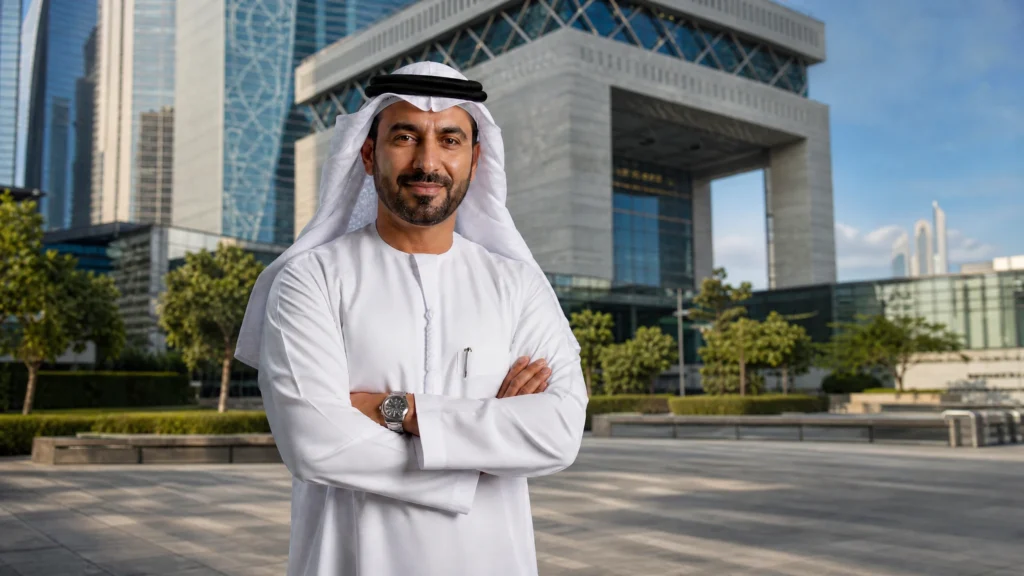
The United Arab Emirates has undergone a seismic shift in its approach to energy and infrastructure, transitioning from a resource-dependent economy to a global pioneer in sustainable development and advanced logistical networks. As we move through 2026, the legal landscape governing these sectors has become increasingly sophisticated, reflecting the nation’s commitment to the UAE Energy Strategy 2050 and the National Hydrogen Strategy. For investors, developers, and multinational corporations, navigating this environment requires a profound understanding of a complex web of federal decrees, emirate-specific regulations, and the specialized jurisdictions of the DIFC and ADGM.
Under the leadership of Adv. Ibrahim Khaleel, DubaiAdvocates.ae has stood at the forefront of this evolution. Our firm provides the strategic legal counsel necessary to navigate large-scale infrastructure projects, renewable energy integration, and public-private partnerships (PPPs) that are currently defining the region’s future. This guide provides a comprehensive overview of the legal pillars supporting the UAE’s energy and infrastructure sectors.
The Regulatory Foundation: Federal Laws and Decrees
The legal architecture of the UAE’s energy sector is anchored by federal legislation designed to unify standards while allowing for regional flexibility. A cornerstone of the current regime is Federal Decree-Law No. 17 of 2022 on Regulating the Connection of Renewable Energy Production Units to the Electrical Grid. This law was a transformative step, decentralizing energy production by allowing private entities and individuals to produce electricity from renewable sources and integrate it into the national grid.
Furthermore, Federal Decree-Law No. 36 of 2023 on the Regulation of Competition plays a vital role in the infrastructure and energy markets. It ensures a level playing field by prohibiting anti-competitive agreements and the abuse of dominant market positions, which is particularly relevant as more private players enter traditionally state-led utility sectors.
In terms of environmental compliance—a non-negotiable aspect of modern infrastructure—Federal Law No. 24 of 1999 for the Protection and Development of the Environment remains the primary benchmark. However, it is now augmented by the Federal Decree-Law No. 11 of 2024 on the Reduction of Climate Change Effects, which mandates rigorous greenhouse gas (GHG) reporting and reduction targets for “sources” within the infrastructure and industrial sectors by May 2026.
Private Sector Participation in Dubai: Law No. 6 of 2011
In Dubai, the framework for utility infrastructure is specifically governed by Dubai Law No. 6 of 2011 Regulating the Participation of the Private Sector in Electricity and Water Production. This legislation broke the traditional monopoly, allowing for the establishment of Independent Power Producers (IPPs) and Independent Water and Power Producers (IWPPs).
Under this law, the Dubai Electricity and Water Authority (DEWA) acts as the single off-taker, while the Regulatory and Supervisory Bureau (RSB) for the electricity and water sector in Dubai provides the necessary licensing and technical oversight. This model has been instrumental in the success of the Mohammed bin Rashid Al Maktoum Solar Park, one of the world’s largest renewable energy projects.
Key Regulatory Bodies in Dubai and the UAE
- Ministry of Energy and Infrastructure (MOEI): The primary federal authority responsible for national policies, infrastructure standards, and the “UAEV” electric vehicle charging network.
- Department of Energy (DoE) – Abu Dhabi: Regulates the energy and water sector in the capital, overseeing transition strategies and licensing.
- Regulatory and Supervisory Bureau (RSB) Dubai: The licensing body for private power and water production in Dubai.
- Federal Authority for Nuclear Regulation (FANR): Oversees the safety and security of the UAE’s nuclear energy program, such as the Barakah plant.
Infrastructure Financing: The Role of DIFC and ADGM
When it comes to the complex financial structuring of infrastructure projects, the Dubai International Financial Centre (DIFC) and Abu Dhabi Global Market (ADGM) offer specialized legal environments. These “financial free zones” operate under common law frameworks, which are often preferred by international lenders and private equity firms for project finance, securitization, and dispute resolution.
The DIFC Markets Law and ADGM Financial Services and Markets Regulations provide a robust platform for issuing “Green Bonds” and “Sustainability-Linked Loans.” These financial instruments are critical for funding the $150–$200 billion investment required by 2030 under the updated National Energy Strategy. Furthermore, the DIFC Courts and the ADGM Courts offer an efficient, English-language judicial system that is highly regarded for its handling of complex commercial disputes involving multinational consortia.
Managing Competition and Anti-Monopoly Measures
As the UAE opens its infrastructure projects to international bidding, the application of Federal Decree-Law No. 36 of 2023 becomes paramount. Legal counsel must ensure that joint ventures and consortia formed for large-scale energy projects do not inadvertently fall foul of “restrictive agreements” clauses.
The Ministry of Economy acts as the primary regulator for competition matters, and any “economic concentration” (mergers or acquisitions) that exceeds specific market share thresholds must be cleared. In the energy sector, where high entry costs naturally limit the number of players, staying compliant with these competition laws is essential to avoid significant administrative penalties and reputational damage.
Sustainable Infrastructure and the 2026 Climate Deadlines
2026 marks a critical milestone for the UAE’s infrastructure sector. With the full enforcement of Federal Decree-Law No. 11 of 2024, entities operating large-scale infrastructure—including ports, airports, and industrial zones—must have established their Measurement, Reporting, and Verification (MRV) systems for carbon emissions.
Legal departments are currently focusing on:
- Contractual Renegotiation: Updating existing Operation and Maintenance (O&M) contracts to include “Climate Compliance” clauses.
- Due Diligence: Ensuring that new infrastructure acquisitions account for the potential costs of carbon credits or required technological upgrades to meet emission caps.
- PPP Agreements: Integrating sustainability KPIs into Public-Private Partnership agreements to align with the Ministry of Energy and Infrastructure’s targets for government building efficiency.
Addressing Key Scenarios in Energy Law
1. Developing a Distributed Renewable Energy Project
Clients frequently ask about the legality of installing solar panels on commercial warehouses to sell excess power back to the grid. Under Federal Decree-Law No. 17 of 2022, this is now legally supported. However, the producer must sign a specific “Connection Agreement” with the local service provider (e.g., DEWA or Etihad WE) and comply with the technical standards set by the competent authority.
2. Navigating PPP Disputes in Infrastructure
When disputes arise in long-term infrastructure concessions, the choice of forum is vital. While onshore Dubai Courts handle many local disputes, large-scale PPPs often include arbitration clauses. The Dubai International Arbitration Centre (DIAC) is the preferred venue, operating under the updated DIAC Arbitration Rules 2022, which provide streamlined procedures for multi-party and multi-contract disputes common in the energy sector.
3. Transitioning to Hydrogen Energy
With the National Hydrogen Strategy 2031, the UAE aims to be a top producer. This involves new legal requirements for “Low-Carbon Hydrogen” certification. We advise developers on the evolving regulatory framework being drafted by the Ministry of Climate Change and Environment (MOCCAE) and the MOEI to ensure their production methods meet both local and international export standards.
The Role of DubaiAdvocates.ae Lawyers and Legal Consultants
At DubaiAdvocates.ae, our expertise in energy and infrastructure is grounded in years of practical experience navigating the UAE’s regulatory corridors. Led by Adv. Ibrahim Khaleel, our team provides comprehensive support throughout the lifecycle of a project—from initial feasibility and licensing to financial closing and dispute resolution.
We assist clients in:
- Regulatory Compliance: Ensuring all energy production and infrastructure development projects adhere to Federal and Emirate-level decrees.
- Drafting and Negotiating Agreements: Crafting robust Power Purchase Agreements (PPAs), EPC (Engineering, Procurement, and Construction) contracts, and Concession Agreements.
- Jurisdictional Strategy: Advising on the most beneficial jurisdiction for project holding companies, whether onshore, in the DIFC, or the ADGM.
- Litigation and Arbitration: Representing clients before the Dubai Courts and international arbitration tribunals in matters of construction delays, tariff disputes, and contractual breaches.
Overview
English:
The UAE energy and infrastructure sector is governed by a modern framework, including Federal Decree-Law No. 17 of 2022 and Law No. 6 of 2011 in Dubai. These laws facilitate private investment and renewable energy integration.
Arabic (العربية):
يتم تنظيم قطاع الطاقة والبنية التحتية في الإمارات من خلال إطار قانوني حديث، بما في ذلك المرسوم بقانون اتحادي رقم 17 لسنة 2022 وقانون رقم 6 لسنة 2011 في دبي. تسهل هذه القوانين الاستثمار الخاص وتكامل الطاقة المتجددة.
French (Français):
Le secteur de l’énergie et des infrastructures aux EAU est régi par un cadre moderne, notamment le décret-loi fédéral n° 17 de 2022 et la loi n° 6 de 2011 à Dubaï, facilitant l’investissement privé.
Russian (Русский):
Сектор энергетики и инфраструктуры ОАЭ регулируется современной базой, включая Федеральный указ-закон № 17 от 2022 года и Закон № 6 от 2011 года в Дубае.
Chinese (中文):
阿联酋能源和基础设施部门受现代框架监管,包括 2022 年第 17 号联邦法令以及迪拜 2011 年第 6 号法律,旨在促进私人投资。
Italian (Italiano):
Il settore dell’energia e delle infrastrutture negli Emirati Arabi Uniti è regolato da un quadro moderno, tra cui il decreto-legge federale n. 17 del 2022 e la legge n. 6 del 2011 a Dubai.
Spanish (Español):
El sector de energía e infraestructura en los EAU se rige por un marco moderno, que incluye el Decreto-Ley Federal n.º 17 de 2022 y la Ley n.º 6 de 2011 en Dubái.
German (Deutsch):
Der Energie- und Infrastruktursektor der VAE wird durch einen modernen Rahmen reguliert, darunter das Bundesdekret-Gesetz Nr. 17 von 2022 und das Gesetz Nr. 6 von 2011 in Dubai.
Hebrew (עברית):
מגזר האנרגיה והתשתיות באיחוד האמירויות מוסדר על ידי מסגרת מודרנית, הכוללת את צו-חוק פדרלי מס’ 17 משנת 2022 וחוק מס’ 6 משנת 2011 בדובאי.
Turkish (Türkçe):
BAE enerji ve altyapı sektörü, 2022 tarihli 17 Sayılı Federal Kararname-Kanun ve Dubai’deki 2011 tarihli 6 Sayılı Kanun dahil olmak üzere modern bir çerçeveyle yönetilmektedir.
Afrikaans:
Die energiesektor en infrastruktuur in die VAE word gereguleer deur ‘n moderne raamwerk, insluitend Federale Dekreet-Wet No. 17 van 2022 en Wet No. 6 van 2011 in Dubai.
Filipino:
Ang sektor ng enerhiya at imprastraktura sa UAE ay pinamamahalaan ng isang modernong balangkas, kabilang ang Federal Decree-Law No. 17 ng 2022 at Batas No. 6 ng 2011 sa Dubai.
Frequently Asked Question
Can a private company generate and sell its own solar power in Dubai?
Yes, under Dubai Law No. 6 of 2011 and Federal Decree-Law No. 17 of 2022, provided they obtain the necessary licenses from the RSB and have a connection agreement with DEWA.
What is the “UAE Energy Strategy 2050”?
It is a national policy aiming to increase the share of clean energy in the total energy mix to 50% and reduce the carbon footprint of power generation by 70%.
Which court handles disputes for energy projects in the DIFC?
The DIFC Courts handle commercial and financial disputes for entities registered within the DIFC, applying a common law framework.
Are there specific environmental permits required for infrastructure projects?
Yes, an Environmental Impact Assessment (EIA) is required under Federal Law No. 24 of 1999 and must be approved by the relevant local authority (e.g., Dubai Municipality or Environment Agency – Abu Dhabi).
What are the new carbon reporting requirements for 2026?
Under Federal Decree-Law No. 11 of 2024, significant “sources” of emissions must report their GHG data to MOCCAE by May 30, 2026.
Does the UAE have a specific law for PPPs?
While there is no single federal PPP law, Dubai has Law No. 22 of 2015 on Public-Private Partnerships, which provides a detailed framework for such projects in the Emirate.
What is the role of the Ministry of Energy and Infrastructure?
MOEI develops national energy policies, manages federal infrastructure projects, and regulates the transport and housing sectors at a federal level.
Can foreign investors own 100% of an energy company?
Following amendments to the Commercial Companies Law (Federal Decree-Law No. 32 of 2021), 100% foreign ownership is possible in many sectors, though “strategic impact” activities may still have specific requirements.
How are electricity tariffs regulated in the UAE?
Tariffs are typically regulated at the Emirate level by bodies like the DoE in Abu Dhabi and the SCE (Supreme Council of Energy) in Dubai.
What legal protections exist for investors in ADGM infrastructure funds?
ADGM provides a common law environment with strong protections for shareholder rights and specialized financial services regulations overseen by the FSRA.
Is nuclear energy regulated differently?
Yes, nuclear activities are strictly governed by the Federal Authority for Nuclear Regulation (FANR) under Federal Law No. 6 of 2009.
What happens if an infrastructure project is delayed?
Legal remedies depend on the “liquidated damages” and “force majeure” clauses in the EPC or concession contract, governed by the UAE Civil Code.
Are there incentives for green infrastructure?
The UAE offers various green financing initiatives and reduced licensing fees for certain renewable energy projects.
How does the Competition Law affect energy mergers?
Federal Decree-Law No. 36 of 2023 requires prior notification to the Ministry of Economy if a merger might lead to a dominant market position.
Can arbitration take place in English in Dubai?
Yes, DIAC allows for arbitration in English, and the DIFC-LCIA (now integrated into DIAC) established a long precedent for English-language proceedings.
Sum-up
The energy and infrastructure sector in the UAE is currently defined by a rapid transition toward sustainability and private sector integration. Success in this field requires more than just technical expertise; it demands a precise understanding of the evolving legal frameworks, from the renewable energy decrees of 2022 to the climate compliance mandates of 2026. By leveraging the specialized jurisdictions of the DIFC and ADGM and adhering to the robust federal laws, businesses can effectively manage risk and contribute to the nation’s ambitious goals.
Call to Action (CTA):
Email: file@dubaiadvocates.ae Phone/WhatsApp: +971561663345 Website: https://dubaiadvocates.ae/
Disclaimer:
“This content is for general informational purposes only and does not constitute legal advice. For advice specific to your situation, consult a qualified legal professional in the UAE.”
Send us a email
file@dubaiadvocates.ae
Contact with us
Our office location
Le Solarium Tower, Level 13, Office 13, Dubai Silicon Oasis, Dubai.
A licensed UAE law firm advising individuals and businesses across corporate law, criminal defence, real estate, employment, family law, and commercial disputes — throughout UAE onshore courts, DIFC, and ADGM.
Working hour
- Monday - Friday
- 09:00 am - 07:00 pm